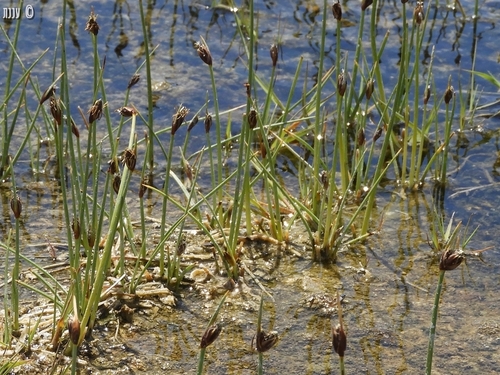
Cyperus maculatus
Boeckeler
no rights reserved
no rights reserved
no rights reserved
What to Eat
Edible parts: Rhizomes, Culms, Tubers, Stems, Root
The rhizomes and culms are cooked and eaten. The tubers, stems, and roots are also edible.
Where to Find It
It is a tropical plant. It grows in sandy areas near water. It can grow in arid places.
Africa, Benin, Botswana, Burkina Faso, Cameroon, Central Africa, Côte d'Ivoire, East Africa, Ghana, Guinea, Guinée, Ivory Coast, Kenya, Madagascar, Mali, Mauritania, Niger, Nigeria, Sahel, Senegal, Sierra Leone, Sudan, West Africa, Zimbabwe,
How to Identify
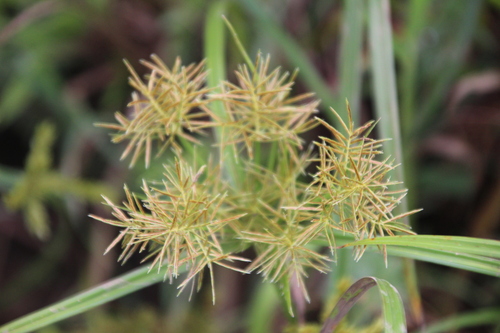
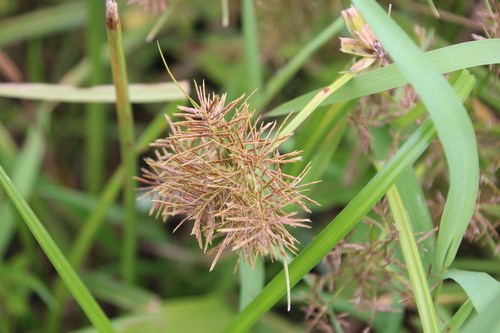
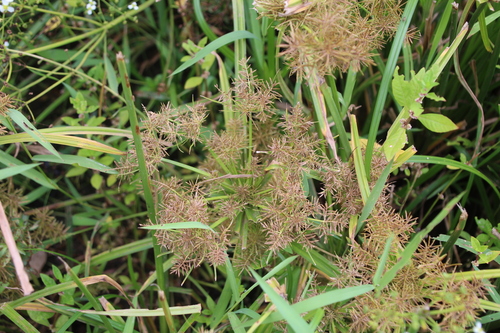
A sedge. It is a herb that keeps growing from year to year. It has hard round tubers and underground stems or rhizomes. The stalks rise from the tubers.
Medicinal Uses
It is used as a famine food.
Other Uses
The tubers are aromatic and are used for making fragrant sachets and perfume. The tubers are also burnt in hut-fires to create a pleasant smell.
Wikipedia
Source ↗Cyperus maculatus is a species of sedge that occurs throughout much of Africa. The species was first formally described by the botanist Johann Otto Boeckeler in 1864.
Other Information
It is a famine food.
Names & Synonyms
Guenun, Kulisaa, Tiacktal
References (4)
- Burkill, H. M., 1985, The useful plants of west tropical Africa, Vol. 1. Kew.
- Royal Botanic Gardens, Kew (1999). Survey of Economic Plants for Arid and Semi-Arid Lands (SEPASAL) database. Published on the Internet; http://www.rbgkew.org.uk/ceb/sepasal/internet [Accessed 16th April 2011]
- Simpson, D. A. & Inglis, C. A., 2001, Cyperaceae of Economic, Ethnobotanical and Horticultural Importance: A checklist. Kew Bulletin Vol. 56, No. 2 (2001), pp. 257-360
- World Checklist of Useful Plant Species 2020. Royal Botanic Gardens, Kew
More from Cyperaceae