Cissus erosa
L. C. Rich.
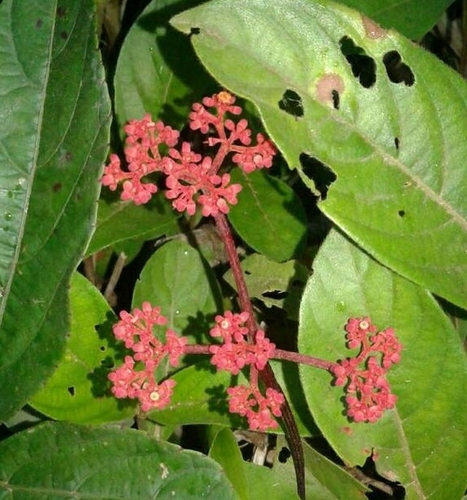
(c) Natália, some rights reserved (CC BY-NC)
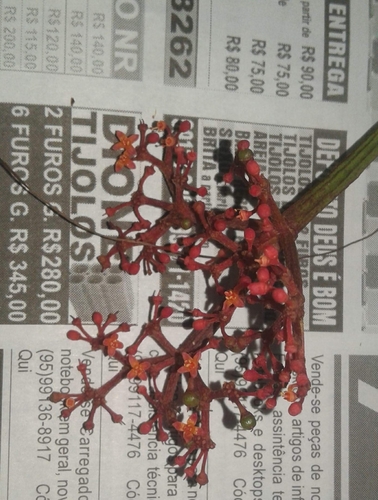
(c) Natália, some rights reserved (CC BY-NC)
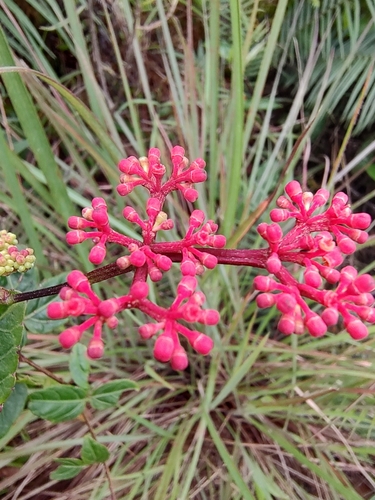
(c) Gabriel Amaral, some rights reserved (CC BY-NC)
What to Eat
Edible parts: Fruit
The fruit is edible.
Where to Find It
It is a tropical plant.
Bolivia, Brazil, Central America*, Colombia, Dominican Republic, Guiana, Guianas, Guyana, Haiti, Hispaniola, South America, Suriname, Venezuela, West Indies*,
How to Identify
A vine. It is not woody and climbs by means of tendrils. It can be 5-6 m long. The stems are angular and have 4-6 wings. The leaves are alternate ad have 3 leaflets. These are narrowly oval and 4-10 cm long by 3-6 cm wide and the end leaflet is larger. The side leaflets are unequal at the sides and there are teeth along the edge. There are tendrils opposite the leaves. The flowering groups are opposite the leaves and in groups. The flowers are red or pink. The fruit is round and 5-7 mm across. They are black when ripe. There is 1 seed 5-7 mm long.
Production
It flowers throughout the year.
Names & Synonyms
Caro de tres hojas, Cipo-de-fogo, Nai nishi, Sirari
References (6)
- Johnson, M. and Colquhoun, A., 1996, Preliminary Ethnobotanical Survey of Kurupukari: An Amerindian Settlement of Central Guyana. Economic Botany, Vol. 50, No. 2, pp. 182-194
- Plants of Haiti Smithsonian Institute http://botany.si.edu/antilles/West Indies
- Peres, M. K., 2011, Diasporos do Cerrado Atrativos para Fauna: Chave Interativa Caracterizacao Visual e Relacoes Ecologicas. Masters thesis. Universidade de Brasilia.
- Roa, J. A. G. & Boada, D. S. G., 2018, Fundación para el Fortalecimiento de la Fruticultura y Plantas Alimenticias no Convencionales en Colombia.
- www.colecionandofrutas.org
- Zambrana, P, et al, 2017, Traditional knowledge hiding in plain sight – twenty-first century ethnobotany of the Chácobo in Beni, Bolivia. Journal of Ethnobiology and Ethnomedicine (2017) 13:57


