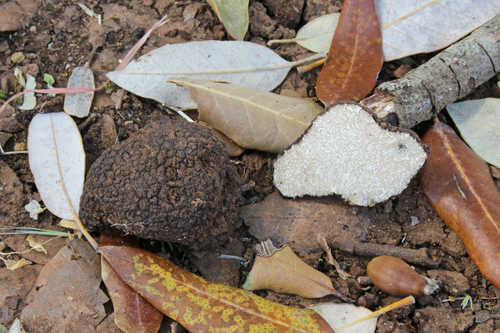
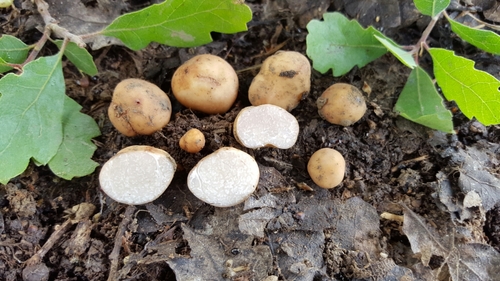
Tuber maculatum

Vittadini

EutuberaceaeMushroomsPotential hazards — see below
Caution — Parts of this plant may be toxic or require specific preparation. Verify with multiple sources before consuming.
Tuber maculatum
iNaturalist · cc-by-nc
(c) Josefa, some rights reserved (CC BY-NC), uploaded by Josefa
Tuber maculatum
iNaturalist · cc-by-nc
(c) Raymonde G Chartier, some rights reserved (CC BY-NC)

What to Eat

Edible parts: Truffle, Fungus

The root of the cuckoo-pint, when roasted well, is edible and when ground was once traded under the name of Portland sago. It was used like salep (orchid flour) to make saloop, a drink popular before the introduction of tea or coffee. It was also used as a substitute for arrowroot. It can be highly toxic if not prepared correctly. The leaves, which are toxic, can be mistaken for edible sorrel. Arum maculatum is also used to make soup in the Andırın region of Turkey where the leaves are leavened with yogurt and boiled for long hours which eliminates toxicity. This process results in a sour soup which is called Tirşik. The Roma of Sliven collect the leaves, dry them in a weave and boil them with several changes of water prior to using them in beef stew.

Known Hazards

All parts of the plant can produce allergic reactions in many people and the plant should be handled with care. The attractive berries are extremely poisonous to many animals, including humans, but harmless to birds, which eat them and propagate the seeds. They contain oxalates of saponins, which have needle-shaped crystals that irritate the skin, mouth, tongue, and throat, and result in swelling of throat, difficulty breathing, burning pain, and upset stomach. However, their acrid taste, coupled with the almost immediate tingling sensation in the mouth when consumed, means that large amounts are rarely taken and serious harm is unusual. It is one of the most common causes of accidental plant poisoning based on attendance at hospital emergency departments. There is no known antidote to A. maculatum poisoning. Airway management may reduce the mortality, and aggressive fluid administration may prevent renal injury.

Where to Find It

It is a temperate plant.

Asia, China, Europe, Italy, Mediterranean, Sweden, Scandinavia,

Countries: Andorra, United Arab Emirates, Afghanistan, Albania, Armenia, Austria, Azerbaijan, Bosnia & Herzegovina, Bangladesh, Belgium, Bulgaria, Bahrain, Brunei, Bhutan, Belarus, Switzerland, China, Cyprus, Czechia, Germany, Denmark, Algeria, Estonia, Egypt, Spain, Finland, France, United Kingdom, Georgia, Greece, Croatia, Hungary, Indonesia, Ireland, Israel, India, Iraq, Iran, Iceland, Italy, Jordan, Japan, Kyrgyzstan, Cambodia, North Korea, South Korea, Kuwait, Kazakhstan, Laos, Lebanon, Liechtenstein, Sri Lanka, Lithuania, Luxembourg, Latvia, Libya, Morocco, Monaco, Moldova, Montenegro, North Macedonia, Myanmar, Mongolia, Malta, Maldives, Malaysia, Netherlands, Norway, Nepal, Oman, Philippines, Pakistan, Poland, Portugal, Qatar, Romania, Serbia, Russia, Saudi Arabia, Sweden, Singapore, Slovenia, Slovakia, San Marino, Syria, Thailand, Tajikistan, Timor-Leste, Turkmenistan, Tunisia, Turkey, Taiwan, Ukraine, Uzbekistan, Vietnam, Yemen

How to Identify

A temperate truffle or mushroom fungus in the Eutuberaceae family.

References (2)
  • Boa, E. R., 2004, Wild edible fungi and their importance to people. FAO Non Wood Forest Products Booklet 17
  • Hall, I. R. Ectomycorrhizal Fungi with Edible Fruiting Bodies, 3. Tuber magnatum, Tuberaceae. Economic Botany, Vol. 52, No. 2, pp. 192-200

More from Eutuberaceae