Bromus catharticus
Vahl
Rescue grass

(c) Lijin Huang (紫楝), some rights reserved (CC BY-NC), uploaded by Lijin Huang (紫楝)
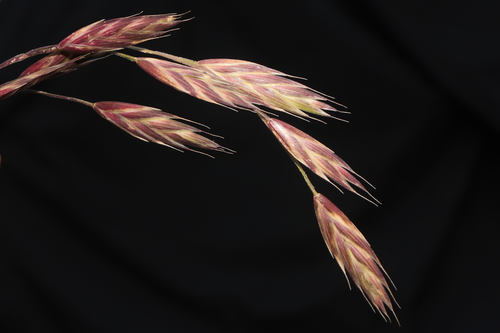
(c) Paúl Gonzáles, some rights reserved (CC BY), uploaded by Paúl Gonzáles

(c) janek42, some rights reserved (CC BY-NC), uploaded by janek42
What to Eat
Edible parts: Seeds, Cereal
The seeds are used as a cereal to make meal.
Where to Find It
A temperate plant. It can grow in arid places. It is mostly in moist places. In Yunnan.
Africa, Argentina, Armenia, Asia, Australia, Azores, Belarus, Bolivia, Brazil, Canary Islands, Caucasus, Central America, Central Asia, Chile, China, Colombia, Costa Rica, East Africa, Easter Island, Ecuador, Egypt, Europe*, Falklands, France, Guatemala, Haiti, Hawaii, India, Israel, Jamaica, Japan, Kazakhstan, Kenya, Korea, Mediterranean, Mexico, Middle East, Moldova, Mozambique, New Zealand, North America, Pakistan, Paraguay, Peru, Portugal, South Africa, Southern Africa, South America, Sri Lanka, St Helena, Taiwan, Tajikistan, Tanzania, Tasmania, Uganda, Ukraine, Uruguay, USA, Venezuela, West Indies, Zimbabwe,
How to Identify
A tussock grass. It usually grows for 1 or 2 years. It grows about 1 m high. It forms tufts and has erect or spreading stems. The blades are narrow and flat. They are 30 cm long by 8 mm wide.
Nutrition Score: 26/100
| Part | Moisture | kJ | kcal | Protein | Vit A | Vit C | Iron | Zinc |
|---|---|---|---|---|---|---|---|---|
| Seeds | 8.5 | — | — | 14 | — | — | — | — |
How to Grow
Plants are grown from seeds.
Wikipedia
Source ↗Bromus catharticus is a species of brome grass known by the common names rescue grass (America), prairie grass (New Zealand), and Schrader's bromegrass in English, and cebadilla criolla and cebadilla in Spanish. It is the most common and most well-known of several species in the Bromus catharticus complex within the Bromus section Ceratochloa, all of which are hexaploids with the chromosome count 2n=42. It is native to South America but it can be found in other places, including Europe, Australia and North America, as an introduced species.
Notes
It is classed as a weed in much of the USA.
Names & Synonyms
Allku mikuna, Bromo criollo, Cebadilla criolla, Cevadilha, Guilno, Huilmo, Lanco, Llullu kiwa, Milin, Pasto del perro, Prairie grass, Rescue grass, Schrader's brome, Shallipu, Ullka mikuna pacha
References (16)
- Bidak, L. M., et al, 2015, Goods and services provided by native plants in desert ecosystems: Examples from the northwestern coastal desert of Egypt. Global Ecology and Conservation 3 (2015) 433–447
- Cordero, S. E., Abello, L. A., & Galvez, F. L., 2017, Plantas silvestres comestibles y medicinales de Chile y otras partes del mundo. CORMA p 154
- Flora of Pakistan. www.eFloras.org
- Kermath, B. M., et al, 2014, Food Plants in the Americas: A survey of the domesticated, cultivated and wild plants used for Human food in North, Central and South America and the Caribbean. On line draft. p 147
- Kinupp, V. F., 2007, Plantas alimenticias nao-convencionais da regiao metropolitana de Porto Alegre, RS, Brazil p 92
- Leon-Lobos, P., et al, 2022, Patterns of Traditional and Modern Uses of Wild Edible Native Plants of Chile: Challenges and Future Perspectives. Plants (Basel) v 11 (6) Table S1
- Malezas Comestibles del Cono Sur, INTA, 2009, Buernos Aires
- Plants of Haiti Smithsonian Institute http://botany.si.edu/antilles/West Indies
- Royal Botanic Gardens, Kew (1999). Survey of Economic Plants for Arid and Semi-Arid Lands (SEPASAL) database. Published on the Internet; http://www.rbgkew.org.uk/ceb/sepasal/internet [Accessed 8th May 2011]
- Ruiters-Welcome, A. K., 2019, Food plants of southern Africa. Ph.D. thesis. Univ. of Johannesburg p 87
- Schmeda-Hirschmann, G., et al, 1999, Proximate Composition and Biological Activity of Food Plants gathered by Chilean Amerindians. Economic Botany Vol. 53. No. 2. pp. 177-187
- Torre, de la, L., et al, 2008, Enciclopedia de las Plantas Útiles del Ecuador. Herbario QCA. Pontificia Universidad Católica del Ecuador. p 508
- Upson, R., & Lewis R., 2014, Updated Vascular Plant Checklist and Atlas for the Falkland Islands. Falklands Conservation and Kew.
- Welcome, A. K. & Van Wyk, B.-E., 2019, An inventory and analysis of the food plants of southern Africa. South African Journal of Botany 122 (2019) 136–179
- World Checklist of Useful Plant Species 2020. Royal Botanic Gardens, Kew
- Zizka, G., 1991, Flowering Plants of Easter Island. Palmarum Hortus Francofurtensis


