Apium australe
Thouars
Wild celery, Apio silvestre, Nolquin
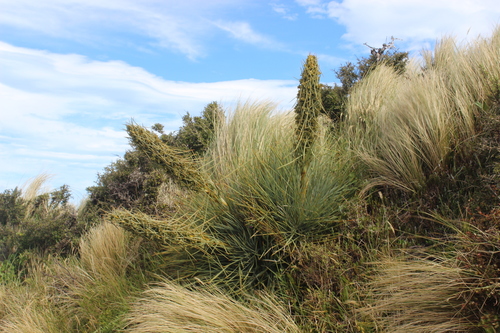
(c) Tristan Jobin, some rights reserved (CC BY), uploaded by Tristan Jobin

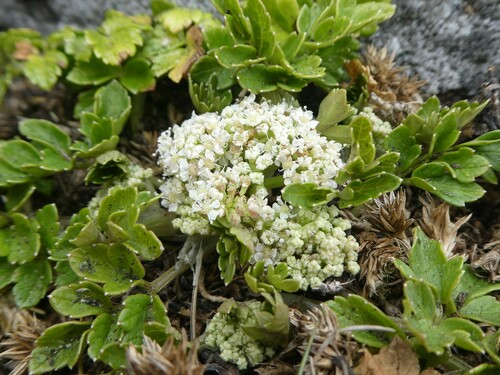
(c) Nodora L. Moyano, some rights reserved (CC BY-NC-SA), uploaded by Nodora L. Moyano

(c) Nodora L. Moyano, some rights reserved (CC BY-NC-SA), uploaded by Nodora L. Moyano
What to Eat
Edible parts: Leaves, Root
Edible Parts: Leaves Root Seed Edible Uses: Leaves - raw or cooked. A salty taste, it is used as a flavouring in soups etc. Used like celery. The leaves can also be eaten raw but have a very strong flavour. Root. No further details. Seed - used as a flavouring in soups etc.
Known Hazards
Where to Find It
It is a temperate plant. It grows in Subantarctic forest and in the Patagonian steppe near streams and rivers.
Argentina, Australia, Chile, Falklands, South America,
How to Identify
A herb. It has a taproot and keeps growing from year to year. It can grow 50 cm tall.
How to Grow
We have very little information on this species and do not know if it will be hardy in Britain, though judging by its native range it should succeed outdoors in many parts of this country. Plants are likely to prefer a rich moist soil with some shade in the summer. The crushed leaves smell strongly of celery. The New Zealand form of this plant is now known as A. filiforme, (syn A. prostratum filiforme). The Australian form of this plant has been moved to A. prostratum and only the S. American form is left under this name.
Propagation: Seed - sow spring in a greenhouse. Germination can take a month or longer. When large enough to handle, prick the seedlings out into individual pots and plant them out in the summer. Division in spring.
Medicinal Uses
None known
Other Uses
Waterproofing Used for pads to make canoes watertight. Special Uses Scented Plants
Wikipedia
Source ↗Apium australe is a species of the genus Apium of the family Apiaceae. It is a perennial herb with a distribution in salt-marsh and saline habitats of Southern South America.
Names & Synonyms
References (10)
- Bircher, A. G. & Bircher, W. H., 2000, Encyclopedia of Fruit Trees and Edible Flowering Plants in Egypt and the Subtropics. AUC Press. p 35
- Ladio, A. H. & Lozada, M., 2000, Edible Plant Use in a Mapuche Community of North-western Patagonia, Human Ecology. Vol. 28, No. 1. pp. 53-71
- Ladio, A. H., 2001, The Maintenance of Wild Edible Plant Gatherings in a Mapuche Community of Patagonia. Economic Botany, Vol. 55, No. 2, pp. 243-254
- Ladio, A. H. and Lozada, M., 2003, Comparison of wild edible plant diversity and foraging strategies in two aboriginal communities of northwestern Patagonia. Biodiversity and Conservation 12: 937–951
- Ladio, A. H. and Lozada, M., 2004, Patterns of use and knowledge of wild edible plants in distinct ecological environments: a case study of a Mapuche community from northwestern Patagonia. Biodiversity and Conservation 13:1153-1173
- Ladio, A., Lozada, M. & M. Weigandt, 2007, Comparison of traditional wild plant knowledge between aboriginal communities inhabiting arid and forest environments in Patagonia, Argentina. Journal of Arid Environments 69 (2007) 695–715
- Maiden, J. H., 1889, The Useful Native Plants of Australia (including Tasmania). The Technology Museum of NSW, Sydney. p 7
- Rapoport, E. H. & Ladio, A. H., 1999, Plantas comestibles. Bosque Volume 20 No. 2. ISSN 0314-8799
- Schmeda-Hirschmann, G., et al, 1999, Proximate Composition and Biological Activity of Food Plants gathered by Chilean Amerindians. Economic Botany Vol. 53. No. 2. pp. 177-187
- Upson, R., & Lewis R., 2014, Updated Vascular Plant Checklist and Atlas for the Falkland Islands. Falklands Conservation and Kew.