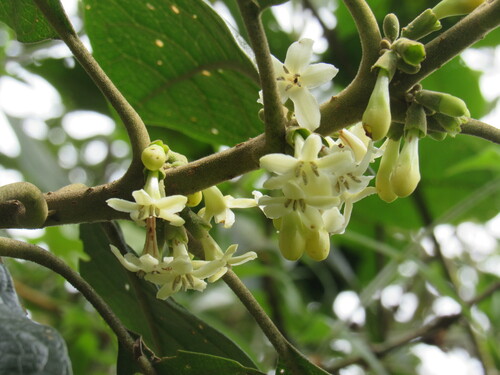
Thymus sipyleus
Boiss.

iNaturalist · cc-by-nc
(c) kemytkawon, some rights reserved (CC BY-NC)
(c) kemytkawon, some rights reserved (CC BY-NC)
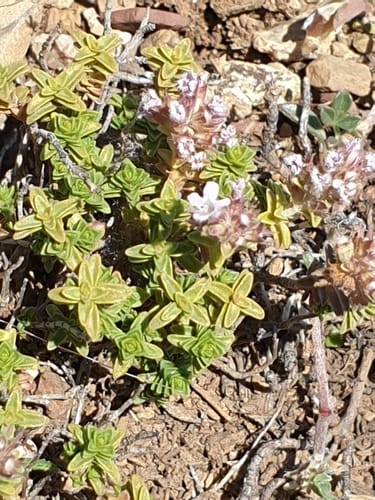
iNaturalist · cc-by-nc
(c) albach, some rights reserved (CC BY-NC)
(c) albach, some rights reserved (CC BY-NC)
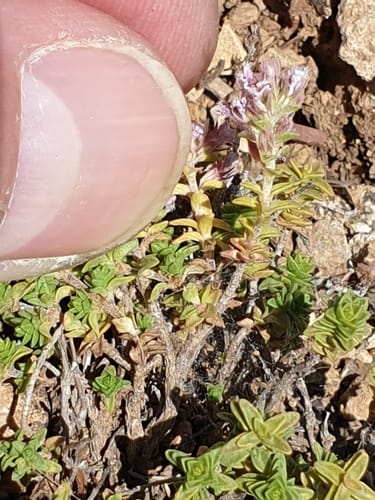
iNaturalist · cc-by-nc
(c) albach, some rights reserved (CC BY-NC)
(c) albach, some rights reserved (CC BY-NC)
What to Eat
Edible parts: Leaves - tea, Flowers, Leaves - spice
The leaves are used as a spice or flavouring, and can be made into tea. The flowers are also edible.
Where to Find It
It is a temperate or Mediterranean plant.
Armenia, Caucasus, Mediterranean, Turkey, Türkiye,
How to Identify
A temperate or Mediterranean herb in the mint family (Lamiaceae) sold in local markets. The leaves are commonly used as a spice and flavouring, while the flowers and leaves can also be prepared as tea.
Medicinal Uses
The leaves are used as a spice or flavouring.
Other Information
It is sold in local markets.
Names & Synonyms
Anix, Kekik, Onix, Sipil kekigi
Thymus imbricatus Celak. [Illegitimate]Thymus jankae subsp. imbricatus Velen.Thymus jankae var. sedoides (Celak.) K. MalýThymus parvifolius K. KochThymus punctatus Vis. [Illegitimate]Thymus punctatus var. sipyleus (Boiss.) RonnigerThymus rariflorus K. KochThymus rariflorus var. ponticus RonnigerThymus rigidus Schott & Kotschy ex Celak.Thymus sedoides Celak.Thymus sipyleus var. davisianus RonnigerThymus sipyleus var. imbricatus (Velen.) RonnigerThymus sipyleus var. punctatus RonnigerThymus sipyleus subsp. rosulans (Borbás) JalasThymus squarrosus Fisch. & C.A. Mey.Thymus zygioides subsp. rosulans Borbás
References (8)
- Dogan, Y., et al, 2004, The Use of Wild Edible Plants in Western and Central Anatolia (Turkey). Economic Botany 58(4) pp. 684-690
- Ertug, F, Yenen Bitkiler. Resimli Türkiye Florası -I- Flora of Turkey - Ethnobotany supplement
- Gunes, S. et al, 2018, Survey of wild food plants for human consumption in Karaisali (Adana-Turkey). Indian Journal of Traditional Knowledge. Vol. 17(2), April 2018, pp 290-298 (As Thymus sipyleus subsp. sipyleus)
- Hovsepyan, R., et al, 2016, Food as a marker for economy and part of identity: traditional vegetal food of Yezidis and Kurds in Armenia. Journal of Ethnic Foods. 3:32-41 (As Thymus rariflorus)
- Nanagulyan, S., et al, 2020, Wild plants and fungi sold in the markets of Yerevan (Armenia). Journal of Ethnobiology and Ethnomedicine 16:26 (As Thymus rariflorus)
- Polat, R., et al, 2017, Survey of wild food plants for human consumption in Bingol, (Turkey). Indian Journal of Traditional Knowledge. Vol. 16(3) July 2017, pp. 378-384
- Rivera, D. et al, 2006, Gathered Mediterranean Food Plants - Ethnobotanical Investigations and Historical Development, in Heinrich M, Müller WE, Galli C (eds): Local Mediterranean Food Plants and Nutraceuticals. Forum Nutr. Basel, Karger, 2006, vol 59, pp 18–74
- Senkardes, I & Tuzlaci, E., 2016, Wild Edible Plants of Southern Part of Nevsehir inTurkey. Marmara Pharmaceutical Journal 20:34-43