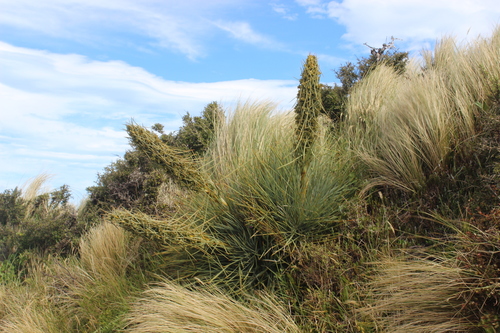
Bupleurum octoradiatum
Bunge

Paris, Museum National d'Histoire Naturelle, ER

GBIF

GBIF
What to Eat
Edible parts: Leaves
Edible Parts: Leaves Shoots Edible Uses: Tender young shoots - cooked. They are produced in spring and in autumn.
Where to Find It
It is a temperate plant. It grows in northern China.
Asia, China,
How to Identify
Perennial reaching 0.8 m with a branching growth habit. Flowers September to October with seeds ripening in the same period. Hermaphrodite, self-fertile flowers pollinated by insects. Tolerates light sandy, medium loamy, and heavy clay soils with good drainage. Mildly acidic to mildly alkaline pH preferred. Grows in semi-shade or full sun and prefers moist soil.
How to Grow
We have very little information on this species and do not know if it will be hardy in Britain, though judging by its native range it should succeed outdoors in many parts of this country. The following notes are based on the general needs of the genus. Succeeds in most soils if they are well drained.
Propagation: Seed - sow spring in the greenhouse. The seed usually germinates in 2 - 8 weeks at 15°c. When large enough to handle, prick the seedlings out into individual pots and grow them on in the greenhouse for at least their first winter, planting them out into their permanent positions in late spring or early summer, after the last expected frosts. Division might be possible in the spring.
Medicinal Uses
Carminative Deobstruent Febrifuge Carminative, deobstruent, febrifuge.
Other Uses
Fuel The old plant is used as firewood. Special Uses
Wikipedia
Perennial reaching 0.8 m with a branching growth habit. Flowers September to October with seeds ripening in the same period. Hermaphrodite, self-fertile flowers pollinated by insects. Tolerates light sandy, medium loamy, and heavy clay soils with good drainage. Mildly acidic to mildly alkaline pH preferred. Grows in semi-shade or full sun and prefers moist soil.
Notes
There are about 100 Bupleurum species.
References (3)
- Bircher, A. G. & Bircher, W. H., 2000, Encyclopedia of Fruit Trees and Edible Flowering Plants in Egypt and the Subtropics. AUC Press. p 69
- Hedrick, U.P., 1919, (Ed.), Sturtevant's edible plants of the world. p 139
- Plants for a Future database, The Field, Penpol, Lostwithiel, Cornwall, PL22 0NG, UK. http://www.scs.leeds.ac.uk/pfaf/