Clematis hexapetala
Pallas
Mongolian tea clematis
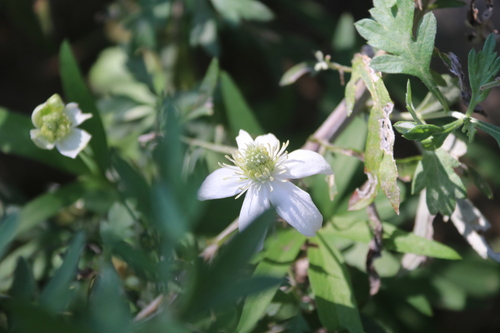
iNaturalist · cc-by-nc
(c) ingester, some rights reserved (CC BY-NC)
(c) ingester, some rights reserved (CC BY-NC)
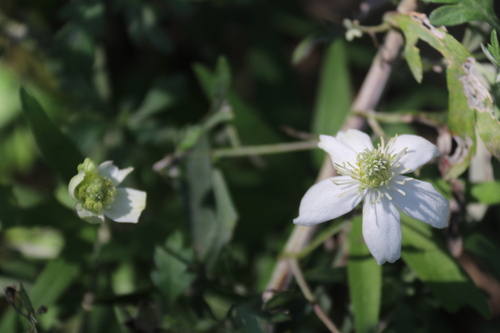
iNaturalist · cc-by-nc
(c) ingester, some rights reserved (CC BY-NC)
(c) ingester, some rights reserved (CC BY-NC)

iNaturalist · cc-by-nc
(c) zcguoxia, some rights reserved (CC BY-NC)
(c) zcguoxia, some rights reserved (CC BY-NC)
What to Eat
Edible parts: Leaves - tea
The stems and leaves are used together to make a tea drink.
Known Hazards
Where to Find It
It is a temperate plant. It suits light to medium, moist, well-drained soils. It needs a protected partly shaded position. It is resistant to frost but damaged by drought.
Asia, Australia, China, Korea, Mongolia, New Zealand, Russia, Siberia,
Countries: United Arab Emirates, Afghanistan, Armenia, Australia, Azerbaijan, Bangladesh, Bahrain, Brunei, Bhutan, China, Georgia, Indonesia, Israel, India, Iraq, Iran, Jordan, Japan, Kyrgyzstan, Cambodia, North Korea, South Korea, Kuwait, Kazakhstan, Laos, Lebanon, Sri Lanka, Myanmar, Mongolia, Maldives, Malaysia, Nepal, Oman, Philippines, Pakistan, Qatar, Russia, Saudi Arabia, Singapore, Syria, Thailand, Tajikistan, Timor-Leste, Turkmenistan, Turkey, Taiwan, Uzbekistan, Vietnam, Yemen
How to Identify
A herb or vine that loses its leaves. It grows 2 m high and spreads 2 m wide. The stem is slender and twining. The leaves are a shiny green. The flowers are white and star shaped.
How to Grow
Plants can be grown from seeds or cuttings.
Medicinal Uses
Traditionally used to make a tea drink from stems and leaves.
Names & Synonyms
Yemongarbu chai
References (5)
- Bodkin, F., 1991, Encyclopedia Botanica. Cornstalk publishing, p 264
- Hu, Shiu-ying, 2005, Food Plants of China. The Chinese University Press. p 389
- Khasbagan, Hu-Yin Huai, and Sheng-Ji pei, 2000, Wild Plants in the Diet of Athorchin Mongol Herdsmen in Inner Mongolia. Economic Botany 54(4): 528-536
- Urgamal, M., Oyuntsetseg, B., Nyambayar, D. & Dulamsuren, Ch. 2014. Conspectus of the vascular plants of Mongolia. (Editors: Sanchir, Ch. & Jamsran, Ts.). Ulaanbaatar, Mongolia. “Admon“ Press. 334pp. (p. 79-90).
- Zhang, Y., et al, Yunatov’s Records of Wild Edible Plant Used by the Mongols in Mongolia During 1940- 1951: Ethnobotanical Arrangements and Discussions. Inner Mongolia Normal University. p 12


