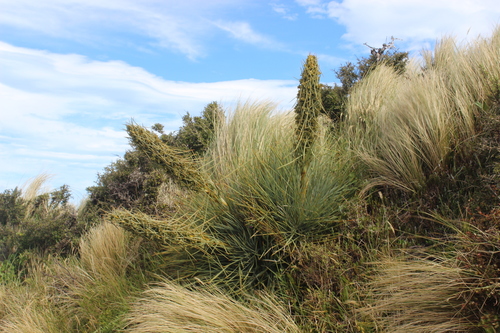
Azorella monantha
Clos
Tufted azorella
ApiaceaeRoots
iNaturalist · cc-by
(c) Matias Cabezas, some rights reserved (CC BY), uploaded by Matias Cabezas
(c) Matias Cabezas, some rights reserved (CC BY), uploaded by Matias Cabezas
iNaturalist · cc-by
(c) My-Lan Le, some rights reserved (CC BY), uploaded by My-Lan Le
(c) My-Lan Le, some rights reserved (CC BY), uploaded by My-Lan Le
iNaturalist · cc-by
(c) My-Lan Le, some rights reserved (CC BY), uploaded by My-Lan Le
(c) My-Lan Le, some rights reserved (CC BY), uploaded by My-Lan Le
What to Eat
Edible parts: Roots
The roots are eaten raw or cooked.
Where to Find It
It is a temperate plant. It grows in the Patagonian steppe at 1,200 m altitude. In Argentina it grows from sea level to 3,000 m above sea level.
Argentina*, Bolivia, Chile, Falklands, Peru, South America,
How to Identify
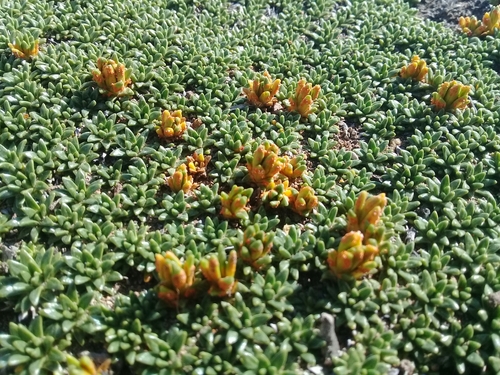
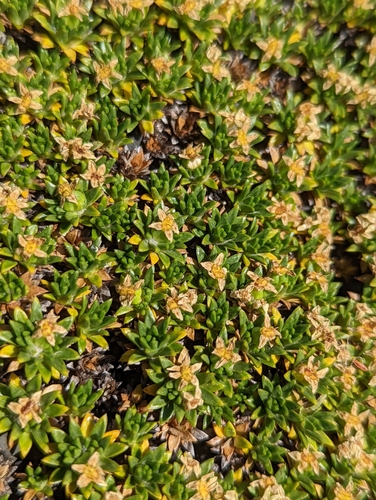
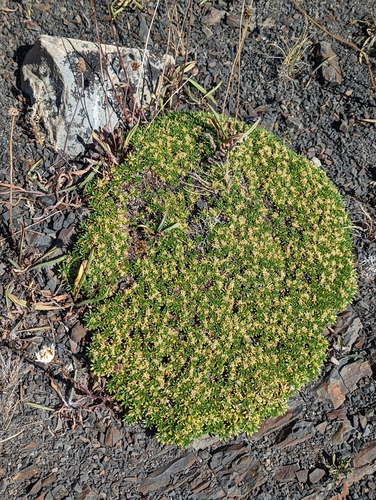
A herb or small shrub. It keeps growing from year to year. The leaves are 3-10 mm long by 1-2 mm wide and do not have stalks. There are 1-5 flowers in a group. The fruit are 4-6 mm long by 3-5 mm wide.
Names & Synonyms
Kallfuko, Kuramamull, Lena piedra, Yareta
References (7)
- Kermath, B. M., et al, 2014, Food Plants in the Americas: A survey of the domesticated, cultivated and wild plants used for Human food in North, Central and South America and the Caribbean. On line draft. p 113
- Ladio, A. H. & Lozada, M., 2000, Edible Plant Use in a Mapuche Community of North-western Patagonia, Human Ecology. Vol. 28, No. 1. pp. 53-71
- Ladio, A. H., 2001, The Maintenance of Wild Edible Plant Gatherings in a Mapuche Community of Patagonia. Economic Botany, Vol. 55, No. 2, pp. 243-254
- Ladio, A., Lozada, M. & M. Weigandt, 2007, Comparison of traditional wild plant knowledge between aboriginal communities inhabiting arid and forest environments in Patagonia, Argentina. Journal of Arid Environments 69 (2007) 695–715
- Leon-Lobos, P., et al, 2022, Patterns of Traditional and Modern Uses of Wild Edible Native Plants of Chile: Challenges and Future Perspectives. Plants (Basel) v 11 (6) Table S1
- Ochoa, J. S., & Ladio, A, H, 2015, Current use of wild plants with edible underground storage organs in a rural population of Patogonia: between tradition and change. Journal of Ethnobiology and Ethnomedicine 11:70
- Upson, R., & Lewis R., 2014, Updated Vascular Plant Checklist and Atlas for the Falkland Islands. Falklands Conservation and Kew.