Bromus brevis
Steud.
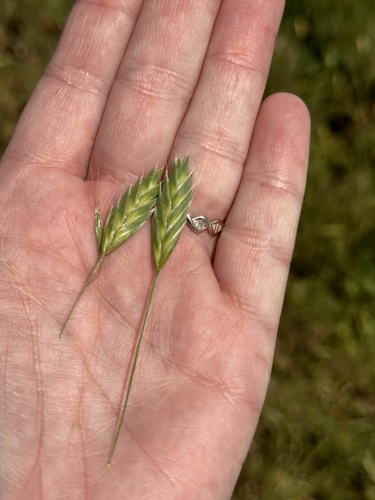
(c) Jaime Baxter-Slye, some rights reserved (CC BY-NC)

(c) Aaron Echols, some rights reserved (CC BY-NC)

(c) Scott Buckel, some rights reserved (CC BY-NC)
What to Eat
Edible parts: Seeds, Cereal
Being a xeric grass, B. brevis is an important forage and fodder grass in arid and semi-arid regions of Argentina. B. brevis was known as lanku kachu to the Ranquel indigenous people, who ate it raw, or used it to make a flour for thickening meat broth or to make into bread.
Where to Find It
It is a warm temperate plant.
Argentina, Australia, South America, Tasmania,
How to Identify
A grass that grows for one or two years. It can have rhizomes or underground stems. It grows 60 cm tall. The leaf sheath is loose.
Wikipedia
Source ↗Bromus brevis, is a species of brome grass endemic also known by the common names pampus brome (English), cebadilla pampeana and cebadilla de la sierra (Spanish - Argentina), and by the indigenous name lanku kachu (Ranquel). It was described by German botanist and zoologist Christian Gottfried Daniel Nees von Esenbeck in 1854 in Synopsis plantarum glumacearum. It is endemic to central and southwest Argentina, and introduced and naturalised in New Zealand and Australia. B. brevis is one of several species in the Bromus catharticus complex within the Bromus section Ceratochloa, all of which are hexaploids with the chromosome count 2n=42.
Names & Synonyms
Cerabadella, Loica loi, Trigo
References (3)
- Ladio, A. H. & Lozada, M., 2000, Edible Plant Use in a Mapuche Community of North-western Patagonia, Human Ecology. Vol. 28, No. 1. pp. 53-71
- Ladio, A. H., 2001, The Maintenance of Wild Edible Plant Gatherings in a Mapuche Community of Patagonia. Economic Botany, Vol. 55, No. 2, pp. 243-254
- Tasmanian Herbarium Vascular Plants list p 81


