Begonia aptera
Blume
Aptera begonia
(c) Roland Godon, some rights reserved (CC BY), uploaded by Roland Godon
(c) Roland Godon, some rights reserved (CC BY), uploaded by Roland Godon
What to Eat
Edible parts: Leaves, Spice
The leaves are used as a spice.
Where to Find It
It is a tropical plant. It grows on the edges of forests up to 2,000 m above sea level.
Asia, Indochina, Indonesia, New Guinea, SE Asia, Vietnam,
How to Identify
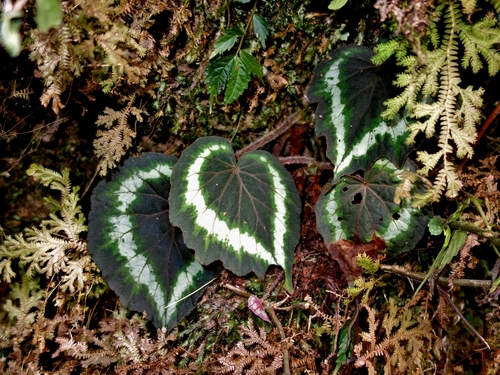
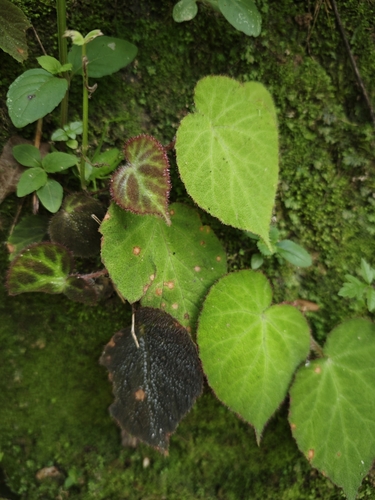
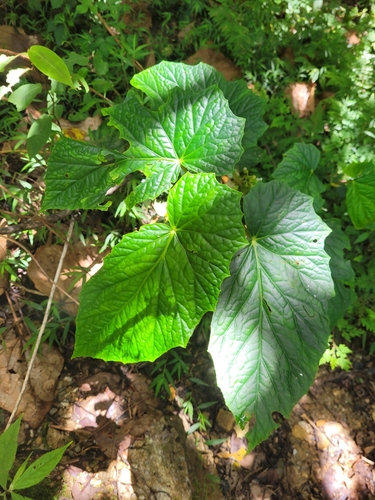
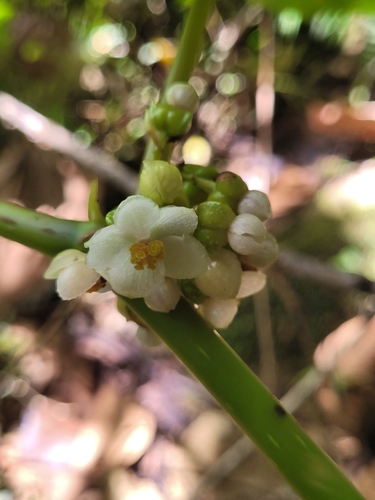
A herb. It grows 1.5 m tall. It has a rhizome or underground stem. The stem is erect and branched. The leaves are broadly sword shaped and unequal on opposite sides. They are 9-29 cm long by 3-11 cm wide. There are irregular teeth along the edge. The leaf stalks are 8-15 cm long. The flowering shoots are small and 5 cm long. They hang down. The flowers are mixed male and female and white. The fruit is a flattened round capsule. It is fleshy and 2 cm across.
How to Grow
Plants can be grown from stem or leaf cuttings or by division of the rhizome or from seeds.
Medicinal Uses
The leaves have traditional medicinal uses.
Names & Synonyms
Begonia aptera, Thu hai duong, Thuhaiduong khong-canh
References (2)
- Ogle, B. M., et al, 2003, Food, Feed or Medicine: The Multiple Functions of Edible Wild Plants in Vietnam. Economic Botany 57(1): 103-117
- Sukarya, D. G., (Ed.) 2013, 3,500 Plant Species of the Botanic Gardens of Indonesia. LIPI p 1068