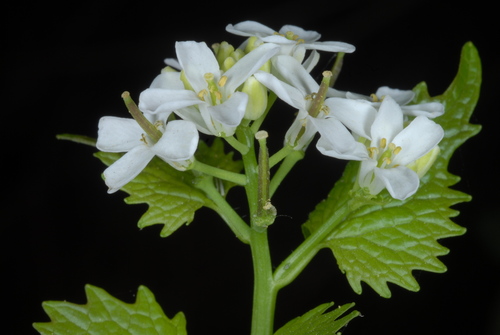
Sisymbrium septulatum
DC.
Slih

iNaturalist · cc-by-nc
(c) Ron Frumkin, some rights reserved (CC BY-NC), uploaded by Ron Frumkin
(c) Ron Frumkin, some rights reserved (CC BY-NC), uploaded by Ron Frumkin

iNaturalist · cc-by-nc
(c) Ron Frumkin, some rights reserved (CC BY-NC), uploaded by Ron Frumkin
(c) Ron Frumkin, some rights reserved (CC BY-NC), uploaded by Ron Frumkin
What to Eat
Edible parts: Stem, Flowers, Leaves
The leaves, flowers, and seeds are eaten as a vegetable.
Where to Find It
It is a Mediterranean plant. It can grow in arid places.
Afghanistan, Africa, Central Asia, Egypt, Iran, Iraq, Israel, Jordan, Kazakhstan, Kuwait, Lebanon, Mediterranean, Middle East, North Africa, Saudi Arabia, Sinai, Syria, Tajikistan, Turkey, Türkiye, Turkmenistan,
Countries: United Arab Emirates, Afghanistan, Albania, Angola, Bosnia & Herzegovina, Burkina Faso, Bahrain, Burundi, Benin, Botswana, Congo (DRC), Central African Republic, Congo (Republic), Cote d'Ivoire, Cameroon, Cape Verde, Cyprus, Djibouti, Algeria, Egypt, Eritrea, Spain, Ethiopia, France, Gabon, Ghana, Gambia, Guinea, Equatorial Guinea, Greece, Guinea-Bissau, Croatia, Israel, Iraq, Iran, Italy, Jordan, Kenya, Kyrgyzstan, Comoros, Kuwait, Kazakhstan, Lebanon, Liberia, Lesotho, Libya, Morocco, Monaco, Montenegro, Madagascar, Mali, Mauritania, Malta, Mauritius, Malawi, Mozambique, Namibia, Niger, Nigeria, Oman, Qatar, Rwanda, Saudi Arabia, Seychelles, Sudan, Slovenia, Sierra Leone, Senegal, Somalia, South Sudan, Sao Tome & Principe, Syria, Eswatini, Chad, Togo, Tajikistan, Turkmenistan, Tunisia, Turkey, Tanzania, Uganda, Uzbekistan, Yemen, South Africa, Zambia, Zimbabwe
How to Identify
A Mediterranean herb in the Brassicaceae family capable of growing in arid places, with edible stems, flowers, and leaves.
References (3)
- Bailey, C. and Danin, A., 1981, Bedouin Plant Utilization in Sinai and the Negev. Economic Botany 35(2): 145-162
- Royal Botanic Gardens, Kew (1999). Survey of Economic Plants for Arid and Semi-Arid Lands (SEPASAL) database. Published on the Internet; http://www.rbgkew.org.uk/ceb/sepasal/internet [Accessed 15th April 2011]
- World Checklist of Useful Plant Species 2020. Royal Botanic Gardens, Kew