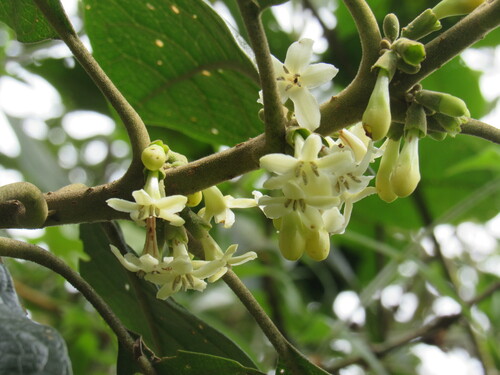
Mentha microphylla
(L.) Huds.
Habag

(c) Sami Tamson, some rights reserved (CC BY-NC)

(c) Sami Tamson, some rights reserved (CC BY-NC)

(c) Sami Tamson, some rights reserved (CC BY-NC)
What to Eat
Edible parts: Leaves - tea
The leaves are used to make a tea drink.
Where to Find It
It is a Mediterranean climate plant.
Egypt - Sinai, Israel, Mediterranean, Middle East, Saudi Arabia,
How to Identify
An herb in the mint family (Lamiaceae) native to Mediterranean climate regions.
Medicinal Uses
Nicholas Culpeper's Complete Herbal (1653) states that "It is good for wind and colic in the stomach ... The juice, laid on warm, helps the King's evil or kernels in the throat ... The decoction or distilled water helps a stinking breath, proceeding from corruption of the teeth, and snuffed up the nose, purges the head. It helps the scurf or dandruff of the head used with vinegar." In addition, Mentha longifolia, like other Mentha species, is known to have important medicinal properties.
References (1)
- Bailey, C. and Danin, A., 1981, Bedouin Plant Utilization in Sinai and the Negev. Economic Botany 35(2): 145-162