Antiaris toxicaria
Leschenault
False iroko, Ako, Sackingtree, Upastree
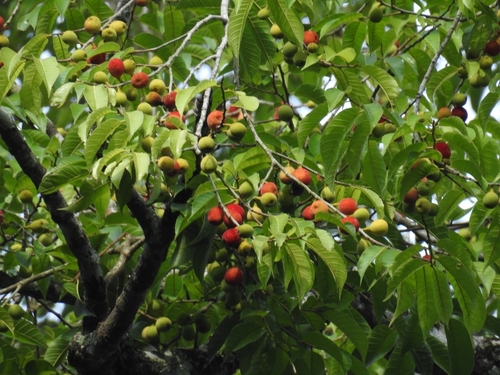
(c) Srinivasan Kasinathan, some rights reserved (CC BY), uploaded by Srinivasan Kasinathan
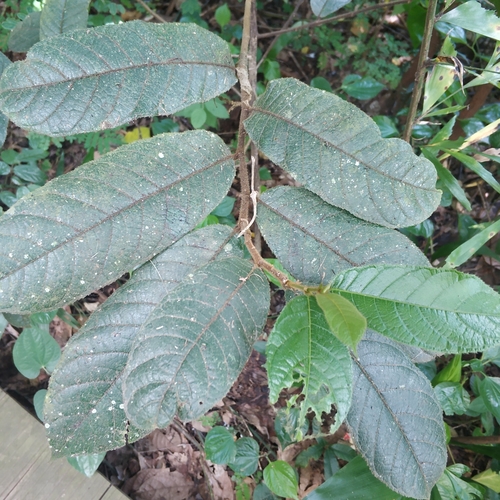
(c) 刘光裕 Liu Guangyu, some rights reserved (CC BY-NC), uploaded by 刘光裕 Liu Guangyu

(c) Marco Schmidt, some rights reserved (CC BY-NC-SA), uploaded by Marco Schmidt
What to Eat
Edible parts: Fruit, Caution
The fruit is edible. The dark red, ellipsoid to ovoid fruit is up to 20mm long and 15mm wide, containing a single seed.
Known Hazards
Where to Find It
It is a tropical plant. In West Africa it grows from sea level to 1,800 m altitude. In southern China it grows up to 1,500 m above sea level. In XTBG Yunnan.
Africa, Andamans, Angola, Asia, Australia, Benin, Burkina Faso, Cambodia, Cameroon, Central Africa, Central African Republic, CAR, Chad, China, Congo, Côte d’Ivoire, East Africa, East Timor, Ethiopia, Fiji, Gabon, Gambia, Ghana, Guinea, Guinée, Guinea-Bissau, India, Indochina, Indonesia, Ivory Coast, Kenya, Laos, Liberia, Madagascar, Malaysia, Mali, Middle East, Myanmar, Niger, Nigeria, Pacific, Papua New Guinea, PNG, Philippines, Sahel, SE Asia, Senegal, Sierra Leone, Sri Lanka, Sudan, Tanzania, Thailand, Timor-Leste, Tonga, Uganda, Vanuatu, Vietnam, West Africa, Yemen, Zambia,
How to Identify
A tree. It loses its leaves during the year. It grows 30-45 m high. The trunk is straight and normally only has branches above 25 m high. The trunk can be 180 cm across. There are buttresses 3 m high. The leaves are alternate and simple. The leaves are 6-20 cm long by 3-12 cm wide. There are 1-8 flowers in a group in the axils of leaves. The male and female flowers are separate. The fruit is oval and fleshy. The fruit stalk is large and fleshy. They are 1-1.5 cm long and have 1 seed. The seeds are 7-9 mm long. There are 5 subspecies.
How to Grow
Plants grow from fresh seeds. They grow easily and germinate in 3-13 weeks. Seeds do not store easily.
Propagation: Seed - when sown fresh, the seed has a high germination rate of up to 94% within 2.5 - 13 weeks. Under natural conditions, the seeds lose viability rapidly, but when stored in wet sand at low temperatures they still may have a germination rate of 82% after 5 months.
Medicinal Uses
Antiaris toxicaria is a fairly small-scale source of timber and yields a lightweight hardwood with density of 250–540 kilogram per cubic metre (similar to balsa). As the wood peels very easily and evenly, it is commonly used for veneer. The bark has a high concentration of tannins that are used in traditional clothes dyeing and paints. The seed from the fruit, which is a soft and edible red or purple drupe 2 cm in diameter, is dispersed by birds, bats, possums, monkeys, deer, antelopes and humans. In Africa and Polynesia the bast fibre is harvested and is used in preparing strong, coarse bark cloth for clothing. The clothes often are decorated with the dye produced from the bark tannins. Antiaris toxicaria is an excellent, fast-growing shade tree and often is grown around human dwellings for shade. The leaf litter is an excellent compost material and high in nutrients. It often is applied as mulch or green manure in local gardens, which must be grown beyond the shade of the extremely dense canopy of the tree. Recently, the plant had allegedly been used by retired Tanzanian pastor Ambilikile Mwasapile to allegedly cure all manner of diseases, including HIV/AIDS, diabetes, high blood pressure, cancer, asthma, and others. While found to be harmless to humans when boiled in accordance with Mwasapile's mode of creating a medicinal drink out of the bark, it allegedly was undergoing testing by the WHO and Tanzanian health authorities to verify whether it has any medicinal value. However, conflicting reports suggest that the plant in question is not in fact Antiaris, but rather Carissa edulis.
Other Uses
The bark fibre is used for cordage. The inner bark is used to make rough clothing, hammocks, sandals, hut walls, cordage, sacks, mats and paper. The stripped bark is soaked in water and beaten, producing a white fibrous cloth. Both clothing and natural sacks are formed from the bark. Small branches are made into the legs of trousers and arms of coats, the larger ones forming the bodies of the garments. In making sacks, sometimes a disk of the wood is left attached to the fibre to form the bottom of the sack. At other times the bark is peeled off. And after being beaten in water and dried, the top and bottom are sewn up, forming the sack. A latex is obtained from the trunk. It is used medicinally and as a hunting poison. The tree is is tapped by making scores in the bark with a knife. The latex is only collected as it is required, since it cannot be stored and must be used fresh. The bark contains tannins and has been used for dyeing. The heartwood is whitish to pale yellow or pale yellow-brown; it is indistinctly demarcated from the up to 8cm wide band of sapwood. The texture is moderately coarse; the grain interlocked; there is a ribbon-like aspect on quarter-sawn faces; the wood is lustrous. Fresh wood has woolly surfaces. The wood is light in weight, soft to very soft, is not durable. There is a high risk of distortion when seasoning; once dry the wood is poorly stable in service. It works easily with hand and machine tools; ordinary saw teeth and cutting tools can be used, but these should be kept sharp to prevent crumbling, particularly along the edges; a smooth finish can be obtained, but with some tearing due to the interlocked grain; peeling and slicing properties are good, but rotary-peeled veneer is somewhat brittle. The wood stains and polishes well, but filling is recommended to obtain a good finish. The nailing and screwing properties are satisfactory; gluing does not cause problems. It is used for interior joinery, panelling, moulding, shuttering, furniture, strip flooring, boxes and crates, tool handles, toys, carvings, peeled and sliced veneer for interior and exterior parts of plywood, fibre and particle board, and block board. It is fairly commonly used domestically for light construction and canoes. It is locally popular for drum making. The wood from the roots is sometimes used as a cork substitute. Seedlings can grow in full light, and rapid growth has been seen in abandoned farmland. With its very wide native range, this makes the tree an excellent candidate for use as a pioneer when restoring native woodland and it would also prove useful when establishing a woodland garden.
Production
Trees are fast growing. They reach full size in 20 years.
Notes
There is only one single variable Antiaris species. There are 5 subspecies. Fruit are larger in African plants.
Names & Synonyms
Binam-ne, Chor chhork, Congoro, Djaulae, Hkan-gowngru, LIngua-di-baca, Malaing, N'nhonhinhe, Nhenhe, Noii, Nucanhe, Pau-bicho, Pau-de-bicho-amarelo, Po-de-bicho-branco, Po-de-bitche, Po-de-lete, Pohon upas, Tambatchilam, Tchime, Tumbuiru, Vaoni, Venboka, Yeyun
References (14)
- Bosu, P.P. & Krampah, E., 2005. Antiaris toxicaria Lesch. [Internet] Record from Protabase. Louppe, D., Oteng-Amoako, A.A. & Brink, M. (Editors). PROTA (Plant Resources of Tropical Africa / Ressources végétales de l’Afrique tropicale), Wageningen, Netherlands. < http://database.prota.org/search.htm>. Accessed 13 October 2009.
- Cabalion, P. and Morat, P., 1983, Introduction le vegetation, la flore et aux noms vernaculaires de l'ile de Pentcoste (Vanuatu), In: Journal d'agriculture traditionnelle et de botanique appliquee JATBA Vol. 30, 3-4
- Cengel, D. J. & Dany, C., (Eds), 2016, Integrating Forest Biodiversity Resource Management and Sustainable Community Livelihood Development in the Preah Vihear Protected Forest. International Tropical Timber Organization p 119
- Chapman, J. D. & Chapman, H. M., 2001, The Forest Flora of Taraba and Andamawa States, Nigeria. WWF & University of Canterbury. p 189
- Codjia, J. T. C., et al, 2003, Diversity and local valorisation of vegetal edible products in Benin. Cahiers Agricultures 12:1-12
- Conn, B. & Damas, K.. Guide to trees of Papua New Guinea. http:/www.pngplants.org/PNGtrees (As Antiaris toxicaria subsp. macrophylla)
- Cowie, I, 2006, A Survey of Flora and vegetation of the proposed Jaco-Tutuala-Lore National Park. Timor-Lests (East Timor) www.territorystories.nt/gov.au p 50 (var. macrophylla)
- Fowler, D. G., 2007, Zambian Plants: Their Vernacular Names and Uses. Kew. p 82
- Polansky, C., 2018, Annex: Tree Identification and Propagation Images and text for 29 species found in Nimba County, Liberia. ACDI p 5
- Sosef, M. S. M., Hong, L. T., & Prawirohatmodjo, S., (Eds.), 1998, Timber tree: Lesser-known timbers. Plant Resources of South-East Asia, 5(3), p 74
- Sukarya, D. G., (Ed.) 2013, 3,500 Plant Species of the Botanic Gardens of Indonesia. LIPI p 128
- Wiersema, J. H. & Leon, B., 2013, World Economic Plants. A Standard Reference CRC Press. 2nd Ed. p 58
- www.eFloras.org Flora of China
- www.worldagroforestrycentre.org/sea/products/afdbases/af


