Elaeagnus oxycarpa
Schlecht.
Sharp-fruited Oleaster

Wikimedia Commons - Roger Culos
What to Eat
Edible parts: Fruit
The fruit are eaten fresh or dried.
Where to Find It
It is a temperate plant. In Kazakhstan it grows in forests along the banks of rivers. It grows in deserts. It grows between 400-700 m above sea level.
Asia, Central Asia, China, Kazakhstan, Russia,
How to Identify
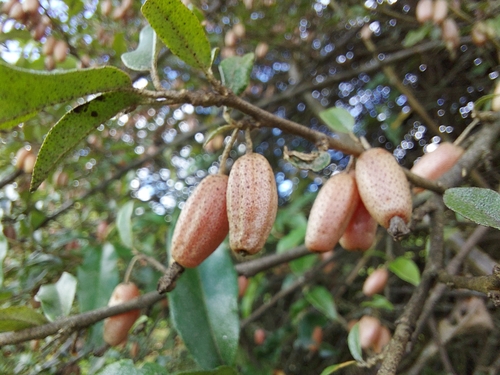
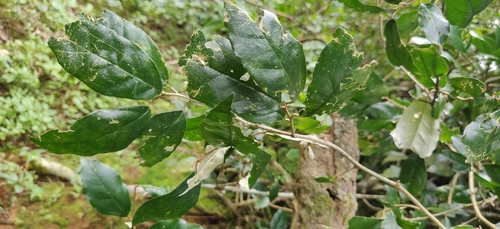
A tree. It grows 3-16 m tall. The bark is reddish-brown and shiny. The crown is open and silvery. The branches have long spines. The leaves are alternate. They are covered with silvery scales. The leaves are widely sword shaped. The flowers are on long clusters and have a sweet smell. The fruit are fleshy with a stone inside. They are 8-10 mm long and 6-7 mm wide. They are yellow or orange. The fruit are edible.
How to Grow
Plants can be grown from seed or from root sprouts.
Medicinal Uses
It is widely grown across southern and central Europe as a drought and cold-resistant ornamental plant for its scented flowers, edible fruit, attractive yellow foliage and black bark. It was grown in England by John Parkinson no later than 1633. In Iran, the dried powder of the fruit is used mixed with milk for rheumatoid arthritis and joint pains. There is evidence supporting beneficial effects of aqueous extract of Persian olive in reducing the symptoms of osteoarthritis with an efficacy comparable to that of acetaminophen and ibuprofen. It is one of the seven items used in Haft-sin, a traditional table setting of Nowruz, the traditional Persian spring celebration. The dried fruit, known locally as senjed, is one of seven served in its own syrup in a fruit salad called haft mēwa eaten during Nowruz in Afghanistan. In folk herbalism Russian olive has a wide variety of uses. The leaves, fruit, flowers, and bark are all employed. The leaves are known to help in the gastrointestinal system, assist in wound healing and are used as an antibacterial. The fruit has a wide range of traditional applications, including use as an anti-inflammatory and antioxidant. The flowers are a traditional remedy for fevers, made as an herbal infusion. In urban settings, landscapers use plantings of Russian olive to discourage the homeless from resting or sleeping in the location.
Production
In China plants flower in May to June and fruit in September to October
References (1)
- Dzhangaliev, A. D., et al, 2003, The Wild Fruit and Nut Plants of Kazakhstan, Horticultural Reviews, Vol. 29. pp 305-371