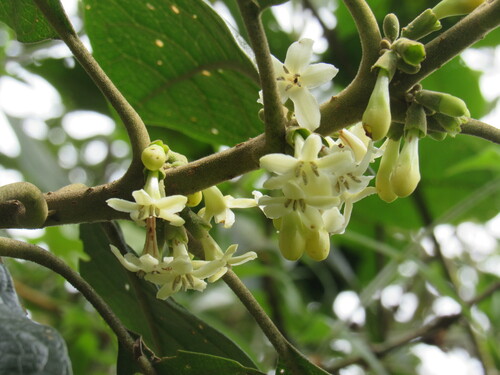
Pogostemon amaranthoides
Benth.

gbif · cc0
Royal Botanic Garden Edinburgh
Royal Botanic Garden Edinburgh

gbif · cc-by
Royal Botanic Gardens, Kew
Royal Botanic Gardens, Kew

gbif · cc-by
Royal Botanic Gardens, Kew
Royal Botanic Gardens, Kew
What to Eat
Edible parts: Leaves, Spice
The young leaves are used as a vegetable and as a spice.
Where to Find It
It is a subtropical plant. In Bhutan it grows between 900-2,100 m above sea level. In Northeastern India it grows between 2,300-2,400 m above sea level.
Asia, Bhutan, Himalayas, India, Northeastern India,
Countries: United Arab Emirates, Afghanistan, Armenia, Azerbaijan, Bangladesh, Bahrain, Brunei, Bhutan, China, Georgia, Indonesia, Israel, India, Iraq, Iran, Jordan, Japan, Kyrgyzstan, Cambodia, North Korea, South Korea, Kuwait, Kazakhstan, Laos, Lebanon, Sri Lanka, Myanmar, Mongolia, Maldives, Malaysia, Nepal, Oman, Philippines, Pakistan, Qatar, Saudi Arabia, Singapore, Syria, Thailand, Tajikistan, Timor-Leste, Turkmenistan, Turkey, Taiwan, Uzbekistan, Vietnam, Yemen
How to Identify
A herb in the mint family (Lamiaceae) that grows in subtropical regions. It is found in Bhutan between 900-2,100 m elevation and in Northeastern India between 2,300-2,400 m elevation.
Names & Synonyms
Namda, Namna, Namnam, Namnang
References (5)
- Mukhia, P.K., et al, 2013, Wild plants as Non Wood Forest Products used by the rural community of Dagana, a southern foothill district of Bhutan, SAARC Journal, 27 pages
- Thapa Laxmi, 2009, The Research Project on Edible Wild Plants of Bhutan and Their Associated traditional Knowledge. http:hdl.handle.net/10091/2919
- Tsering, J., et al, 2017, Ethnobotanical appraisal on wild edible plants used by the Monpa community of Arunchal Pradesh. Indian Journal of Traditional Knowledge. Vol 16(4), October 2017, pp 626-637
- Tsherig, K., 2012, Edible Wild Plants of Bhutan and their contribution to Food and Nutrition Security. Ministry of Ag. and Forests, Bhutan. www.fao.org
- Uprety, Y., et al, 2016, Traditional use and management of NTFPs in Kangchenjunga Landscape: implications for conservation and livelihoods. Journal of Ethnobiology and Ethnomedicine (2016) 12:19