Bromus ciliatus
L.
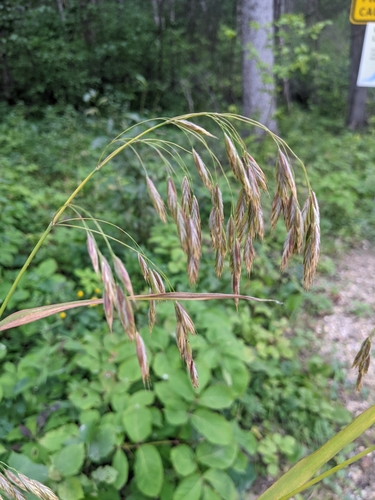
(c) Lynnea Parker, some rights reserved (CC BY-NC), uploaded by Lynnea Parker
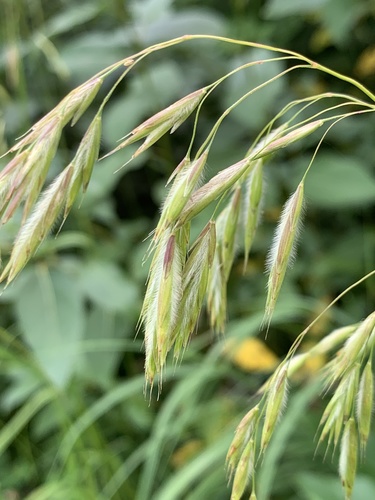
(c) Ryan Durand, some rights reserved (CC BY-NC), uploaded by Ryan Durand
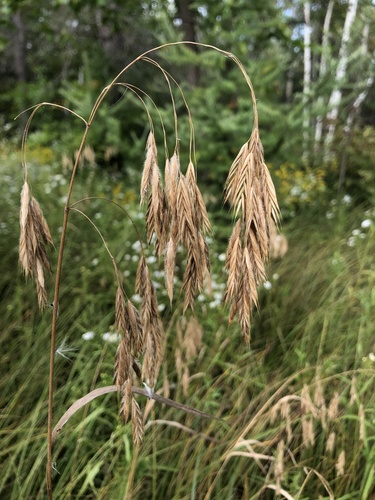
(c) Brian Miller, some rights reserved (CC BY-NC), uploaded by Brian Miller
What to Eat
Edible parts: Seeds, Cereal
The seeds are eaten as a cereal grain.
Where to Find It
It is a cold temperate plant. It grows in mid elevation mountains and at low elevations in north China.
Asia, China, Japan, Korea, Mongolia, North America, Russia, Siberia,
How to Identify
A grass. It keeps growing from year to year. It has short rhizomes. The stems are 70-120 cm tall. They are hairy. The leaf blades are 2-3 cm long by 6-10 mm wide.
Wikipedia
Source ↗Bromus ciliatus is a species of brome grass known by the common name fringed brome. It is native to most of North America, including most of Canada, most of the United States except for some portions of the South, and northern Mexico. It is a plant of many habitats, including temperate coniferous forest. The specific epithet ciliatus is Latin for "ciliate", referring to the delicate hairs of the leaf blades.
References (1)
- Crate, S. A., 2008, "Eating Hay": The Ecology, Economy and Culture of Viliui Sakha Smallholders of Northeastern Siberia. Human Ecology 36:161-174


