Elymus dahuricus
Turczaninow ex Griseb.
PoaceaeSeeds/Nuts
fodder

iNaturalist · cc-by-nc
(c) Svetlana Nesterova, some rights reserved (CC BY-NC), uploaded by Svetlana Nesterova
(c) Svetlana Nesterova, some rights reserved (CC BY-NC), uploaded by Svetlana Nesterova
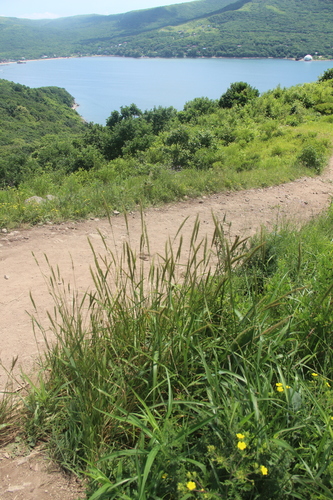
iNaturalist · cc-by-nc
(c) Шильников Дмитрий Сергеевич, some rights reserved (CC BY-NC)
(c) Шильников Дмитрий Сергеевич, some rights reserved (CC BY-NC)
What to Eat
Edible parts: Seeds
The seeds are eaten.
Where to Find It
It is a temperate plant. It grows on mountain slopes at about 2,600 m above sea level in China. In Sichuan and Yunnan.
Asia, Bhutan, Central Asia, China, Himalayas, India, Japan, Kazakhstan, Korea, Kyrgyzstan, Mongolia, Nepal, Russia, Siberia, Tajikistan, Turkmenistan, Uzbekistan,
Countries: United Arab Emirates, Afghanistan, Armenia, Azerbaijan, Bangladesh, Bahrain, Brunei, Bhutan, China, Georgia, Indonesia, Israel, India, Iraq, Iran, Jordan, Japan, Kyrgyzstan, Cambodia, North Korea, South Korea, Kuwait, Kazakhstan, Laos, Lebanon, Sri Lanka, Myanmar, Mongolia, Maldives, Malaysia, Nepal, Oman, Philippines, Pakistan, Qatar, Russia, Saudi Arabia, Singapore, Syria, Thailand, Tajikistan, Timor-Leste, Turkmenistan, Turkey, Taiwan, Uzbekistan, Vietnam, Yemen
How to Identify
A grass. The culms can be erect or bent at the base. It grows 40-140 cm tall. There are 2-4 nodes. The leaf blade is 5-25 cm long by 1 cm wide.
Names & Synonyms
Elymus excelsus Griseb.Elymus excelsus Turcz.and others
References (1)
- Crate, S. A., 2008, "Eating Hay": The Ecology, Economy and Culture of Viliui Sakha Smallholders of Northeastern Siberia. Human Ecology 36:161-174 (As Elymus excelsus)


