Carpinus betulus
L.
Horse bean, Horsebeam, Witch hazel
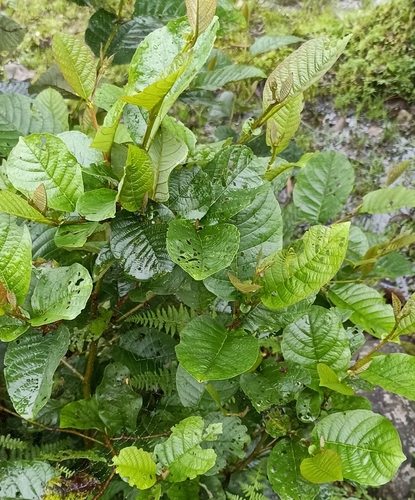
(c) Ihor Olshanskyi, some rights reserved (CC BY-NC), uploaded by Ihor Olshanskyi

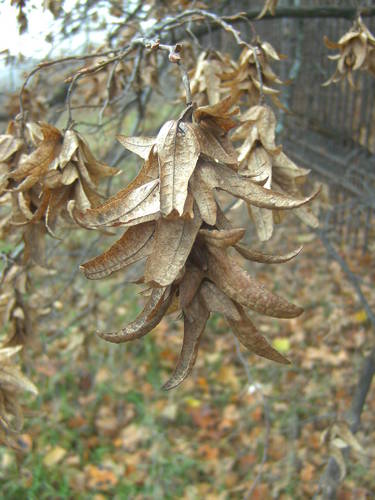
(c) Zo Clark, some rights reserved (CC BY), uploaded by Zo Clark
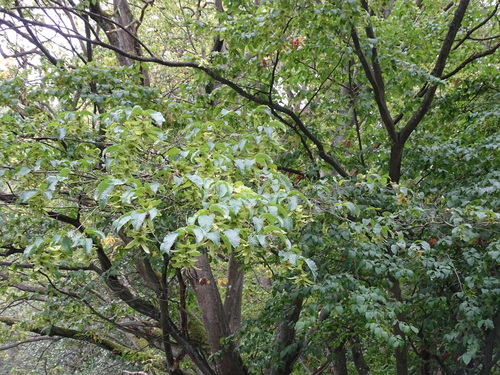
(c) Grzegorz Grzejszczak, some rights reserved (CC BY-SA), uploaded by Grzegorz Grzejszczak
What to Eat
Edible parts: Sap, Leaves
None known
Where to Find It
It is a temperate plant. It does well in shade. It needs moderate soil fertility. It is best in light, well-drained soil. It is resistant to drought and frost. Arboretum Tasmania.
Australia, Azerbaijan, Britain, Caucasus*, Central Asia, Europe, Hungary, Iran, Italy, Luxembourg, Mediterranean, Middle East, Poland, Russia, San Marino, Scandinavia, Slovenia, Sweden, Tajikistan, Tasmania, Ukraine,
How to Identify
A tree that loses its leaves. It can grow 30 m high. It spreads 5 m across. The trunk is erect and stout. The bark is fluted and smooth and grey. The leaves are oval and taper to the tip. The leaves are 10 cm long and have a double set of teeth around the edge. There are hairs on the veins under the leaf. The male flowers are catkins. The female catkins hang down and are 14 cm long. The fruit are small nuts enclosed in a small cone.
How to Grow
Thrives in any good loam, including chalk, it does not demand much light. Prefers a deep open loam and does well on damp clays. Succeeds in all but the most acid soils. Dormant trees are very cold tolerant, the young growth is not usually damaged by late spring frosts. The trees cast a deep shade. A very ornamental plant. Trees are shallow-rooted. The hornbeam has 28 species of associated insects. Trees take 10 - 20 years from seed before they produce seed and about 100 years to reach maturity. At one time this tree was commonly pollarded or coppiced for its wood and for fuel.
Propagation: Seed is best sown in an outdoor seedbed as soon as it is ripe. Germination is usually good but may take 18 months. Seed collected while still green — after ripening but before fully drying on the plant — and sown immediately should germinate the following spring. Grow plants on in the seedbed for two years before transplanting to permanent positions in winter. Average seed viability is around 65%. Stored seed should be pre-treated with 4 weeks of warm stratification followed by 12 weeks of cold stratification, then sown in a cold frame. Prick seedlings into individual pots and grow on in a cold frame until at least 15cm tall before planting out.
Medicinal Uses
The leaves are haemostatic and can be applied in external compresses to stop bleeding and help heal wounds. A distilled water made from the leaves serves as an effective eye lotion. Leaves are harvested in August and dried for later use. The plant is also used in Bach flower remedies, where the keywords for prescribing it are 'Tiredness', 'Weariness', and 'Mental and physical exhaustion'.
Other Uses
Plants can be grown as a medium to tall hedge; when clipped at least once a year in late summer they retain their dead leaves through winter. Clipping should be avoided in spring, as the plant will bleed profusely at that time. A yellow dye is obtained from the bark. The wood is heavy, close-grained, hard, very tough, and highly durable according to most reports, though one source disagrees on durability. It is used for flooring, cogs, tools, and piano mechanisms, and makes a good fuel.
Wikipedia
Source ↗Carpinus betulus, the European or common hornbeam, is a species of tree in the birch family Betulaceae, native to Western Asia and central, eastern, and southern Europe, including southern England. It requires a warm climate for good growth, and occurs only at elevations up to 1,000 metres (3,300 ft). It grows in mixed stands with oak, and in some areas beech, and is also a common tree in scree forests. Hornbeam was also known as yoke elm. Together with Carpinus orientalis and Carpinus austrobalcanica, it is one of the three hornbeams found in Europe.
Notes
There are about 35-40 Carpinus species.
Names & Synonyms
Gyertyan, Navadni gaber
References (4)
- Bodkin, F., 1991, Encyclopedia Botanica. Cornstalk publishing, p 216
- Denes, A., et al, 2012, Wild plants used for food by Hungarian ethnic groups living in the Carpathian Basin. Acta Societatis Botanicorum Poloniae 81 (4): 381-396
- Łukasz Łuczaj and Wojciech M Szymański, 2007, Wild vascular plants gathered for consumption in the Polish countryside: a review. J Ethnobiol Ethnomedicine. 3: 17
- Postman, J. D., et al, 2012, Recent NPGS Coordinated Expeditions in the Trans-Caucasus Region to Collect Wild Relatives of Temperate Fruit and Nut Crops. In Acta Horticulturae Number 948 p 191-198