Dactylis glomerata
L.
Cock's foot
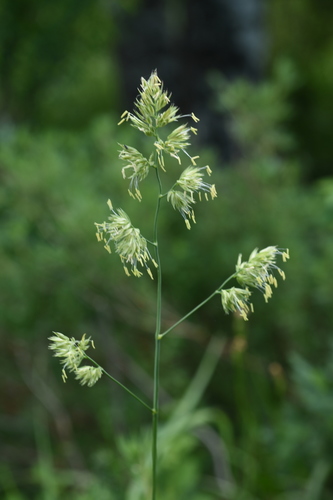
(c) Petr Kosachev, some rights reserved (CC BY-NC), uploaded by Petr Kosachev

(c) Dina Nesterkova, some rights reserved (CC BY-NC), uploaded by Dina Nesterkova
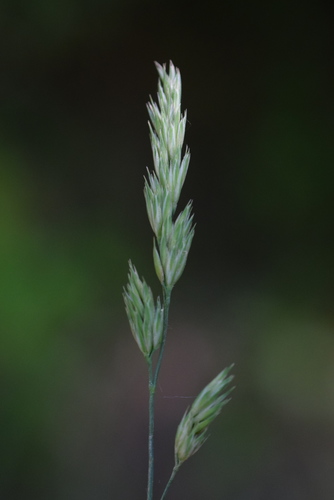
(c) Giovanni Perico, some rights reserved (CC BY-NC), uploaded by Giovanni Perico
What to Eat
Edible parts: Stems
No edible uses are known for this plant.
Known Hazards
Where to Find It
It is a temperate plant. It is best in rich soils. It suits an open sunny position.
Afghanistan, Alaska, Albania, Algeria, Argentina, Asia*, Australia, Austria*, Balkans, Belarus, Belgium, Bolivia, Brazil, Britain, Bulgaria, Cameroon, Canary Islands, Caucasus, Central Asia, Chile, China, Crete, Cyprus, Czech Republic, Denmark, Egypt, Europe*, Falklands, Finland, France, Germany, Greece, Himalayas, Hungary, Iceland, India, Iran, Iraq, Ireland, Italy, Kazakhstan, Korea, Kyrgyzstan, Lebanon, Lesotho, Libya, Luxembourg, Macedonia, Mauritius, Mexico, Middle East, Mongolia, Morocco, Nepal, Netherlands, New Zealand, Norfolk Is., North America, Northeastern India, Pakistan, Peru Poland, Russia, Siberia, South Africa, Southern Africa, South America, Syria, Tajikistan, Tasmania, Tunisia, Turkey, Türkiye, Turkmenistan, Ukraine, Uruguay, USA, Uzbekistan, Xinjiang, Yugoslavia,
How to Identify
A grass. It keeps growing from year to year. It forms clumps. The leaves are bluish green. They are rough, flat and keeled. They sheath the flowering stem at the base. The flowers are 1 sided.
How to Grow
Succeeds in most good soils and also under the shade of trees. Prefers a light well-drained soil, it does not thrive on heavy or poorly drained soils. Plants tolerate an annual precipitation in the range of 31 to 176cm, an annual temperature range of 4.3 to 23.8°C and a pH in the range of 4.5 to 8.2. The plant is adapted to humid temperate climates. It grows on almost any type of soil, but thrives best on heavier types, such as clays and clay loams. A drought-resistant plant, it will withstand high temperatures. Prefers areas with 480-750 mm annual rainfall, but will produce on rather poor dry soils. Plants are hardy in all parts of Britain, though they are less winter-hardy than Phleum pratense or Bromus inermis and do not extend as far north in Europe. A very variable plant. There are both diploid and triploid forms. Numerous strains have been developed, some coarse and stemmy, others good for hay and early grazing. Local ecotypes in the Mediterranean region are adapted to long hot dry summers. In Europe two types have been developed, one for pasture and one for hay. Pasture types produce more basal leaves and generally are more spreading than the hay types. Selections made in Canada, Sweden and Finland are improved for winter hardiness. Improved strains are more leafy, persistent and later flowering than unimproved commercial types. An important food plant for the caterpillars of several lepidoptera species. The plant is occasionally grown for lawns and is particularly well adapted for growing under shade. However, this species does not make a good lawn grass because it is too coarse.
Propagation: Surface sow seed in a cold frame in spring, keeping the compost consistently moist. Germination usually takes place within three weeks. Prick seedlings out into individual pots when large enough to handle and plant out in summer. There are between 725,000 and 1,450,000 seeds per kilo. With sufficient seed, sow directly outdoors in situ in spring. Division is also straightforward in spring — larger clumps can go straight into permanent positions, while smaller clumps are best potted up and grown on in a cold frame until rooting well before planting out in spring.
Medicinal Uses
The plant has been reported to be oestrogenic and is used in folk medicine as a remedy for tumours, and kidney and bladder ailments.
Other Uses
Plants form impenetrably dense clumps and, when planted close together in drifts, make an excellent ground cover. The deep root system also makes the plant useful for checking soil erosion, and it is used in land reclamation, revegetation, and dune stabilization. It can be grown for biomass; annual productivity ranges from 2 to 37 tonnes per hectare. On low-fertility soils, the bulk of production occurs in spring, while on highly fertile soils, growth is well distributed throughout the growing season. The plant is also used as animal feed, fodder, and forage, and it attracts wildlife.
Wikipedia
Source ↗Dactylis glomerata is a species of flowering plant in the grass family Poaceae, known as cock's-foot, also colloquially as orchard grass, or cat grass (due to its popularity for use with domestic cats). It is a cool-season perennial C3 tufted grass native throughout most of Europe, temperate Asia, and northern Africa.
Other Information
The stems are eaten by children as a snack.
Notes
There are about 5 Dactylis species.
Names & Synonyms
Ebir
References (7)
- Bodkin, F., 1991, Encyclopedia Botanica. Cornstalk publishing, p 319
- Denes, A., et al, 2012, Wild plants used for food by Hungarian ethnic groups living in the Carpathian Basin. Acta Societatis Botanicorum Poloniae 81 (4): 381-396
- Flora of Pakistan. www.eFloras.org
- Kew Plants of the World Online
- Łukasz Łuczaj and Wojciech M Szymański, 2007, Wild vascular plants gathered for consumption in the Polish countryside: a review. J Ethnobiol Ethnomedicine. 3: 17
- Łuczaj, L., et al, 2013, Wild edible plants of Belarus: from Rostafiński’s questionnaire of 1883 to the present. Journal of Ethnobiology and Ethnomedicine 2013, 9:21
- Upson, R., & Lewis R., 2014, Updated Vascular Plant Checklist and Atlas for the Falkland Islands. Falklands Conservation and Kew.


