Teucrium fruticans
L.
Tree germander

(c) Mauricio Mercadante, some rights reserved (CC BY-NC-SA)
(c) poetic450, some rights reserved (CC BY-NC), uploaded by poetic450

(c) peganum, some rights reserved (CC BY-SA)
What to Eat
Edible parts: Leaves
The leaves are eaten boiled and seasoned with oil.
Where to Find It
It is a Mediterranean plant. Melbourne Botanical garden.
Europe, Italy, Mediterranean, Sicily,
How to Identify
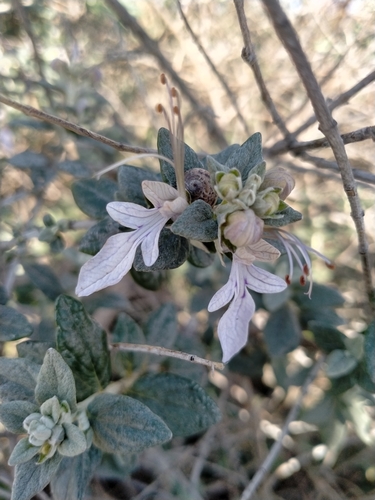
A Mediterranean herb or shrub in the Lamiaceae family, tree germander is also cultivated in botanical gardens.
Wikipedia
Source ↗Teucrium fruticans (common name tree germander or shrubby germander) is a species of flowering plant in the mint family Lamiaceae, native to the western and central Mediterranean. Growing to 1 m (3 ft) tall by 4 m (13 ft) wide, it is a spreading evergreen shrub with arching velvety white shoots, glossy aromatic leaves and pale blue flowers in summer. The Latin specific epithet fruticans means "shrubby" or "bushy". The cultivar 'Azureum', with darker blue flowers, has gained the Royal Horticultural Society's Award of Garden Merit. It is hardy in milder areas, where temperatures do not fall below −5 °C (23 °F). It prefers the shelter of a wall, in full sun with neutral or alkaline soil.
Names & Synonyms
Alivedda, Caca auceddi
References (3)
- Geraci, A., et al, 2018, The wild taxa utilized as vegetables in Sicily (Italy): a traditional component of the Mediterranean diet. Journal of Ethnobiology and Ethnomedicine (2018) 14:14
- Lentini, F. and Venza, F., 2007, Wild food plants of popular use in Sicily. J Ethnobiol Ethnomedicine. 3: 15
- Pasta, S., et al, 2020, An Updated Checklist of the Sicilian Native Edible Plants: Preserving the Traditional Ecological Knowledge of Century-Old Agro-Pastoral Landscapes. Frontiers in Plant Science. Volume 11|Article 388