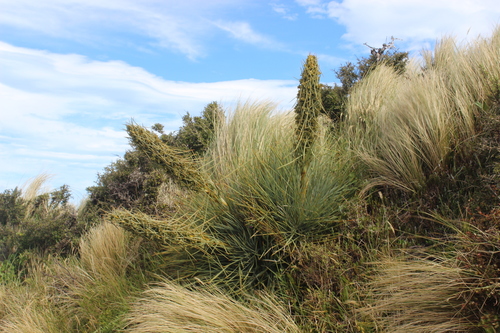
Eryngium amethystinum
L.
Sea holly blue

(c) Giacomo Gola, some rights reserved (CC BY-NC), uploaded by Giacomo Gola

(c) Sonja Bouwman-Gringhuis, some rights reserved (CC BY-NC), uploaded by Sonja Bouwman-Gringhuis

(c) Beatrice Rossetto, some rights reserved (CC BY-NC), uploaded by Beatrice Rossetto
What to Eat
Edible parts: Root
The roots are eaten fresh in salads or processed.
Where to Find It
It is a temperate plant.
Balkans, Bosnia, Europe, Slovenia,
How to Identify
A temperate herb in the carrot family (Apiaceae) with edible roots traditionally used in salads and other preparations.
Wikipedia
Source ↗Eryngium amethystinum, the amethyst eryngo, Italian eryngo or amethyst sea holly, is a clump-forming, perennial, tap-rooted herb. Its stem is 30 to 50 cm long and is light blue to purple in colour. It has a basal circle of obovate, pinnate, spiny, leathery, mid-green leaves. It flowers in mid to late summer with cylindrical umbels, 2–3 cm long atop silvery blue bracts and branching stems. The plant is native to the eastern Mediterranean and prefers dry places and soils that are rich in calcium.
Names & Synonyms
Ametistasta možina, Kotrljan plavi
References (2)
- Redzic, S. J., 2006, Wild Edible Plants and their Traditional Use in the Human Nutrition in Bosnia-Herzegovina. Ecology of Food and Nutrition, 45:189-232
- Redzic, S., 2010, Use of Wild and Semi-Wild Edible Plants in Nutrition and Survival of People in 1430 Days of Siege of Sarajevo during the War in Bosnia and Herzegovina (1992–1995). Coll. Antropol 34 (2010) 2:551-570