Primula intricata
Gren. & Godr.
Planinski jaglac
PrimulaceaeLeaves

iNaturalist · cc-by-nc
(c) Luca Boscain, some rights reserved (CC BY-NC), uploaded by Luca Boscain
(c) Luca Boscain, some rights reserved (CC BY-NC), uploaded by Luca Boscain
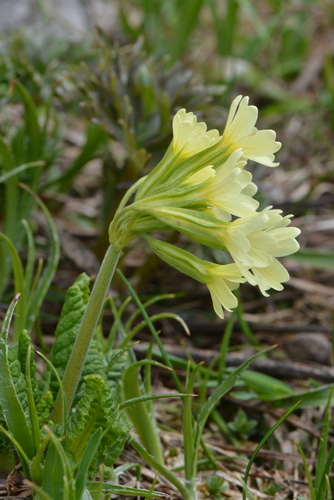
iNaturalist · cc-by-nc
(c) Miguel Ángel Bermejo Roa, some rights reserved (CC BY-NC), uploaded by Miguel Ángel Bermejo Roa
(c) Miguel Ángel Bermejo Roa, some rights reserved (CC BY-NC), uploaded by Miguel Ángel Bermejo Roa

iNaturalist · cc-by-nc
(c) Eliseo Battistin, some rights reserved (CC BY-NC), uploaded by Eliseo Battistin
(c) Eliseo Battistin, some rights reserved (CC BY-NC), uploaded by Eliseo Battistin
What to Eat
Edible parts: Leaves
Young leaves are used fresh in salads.
Where to Find It
It is a Mediterranean climate plant.
Balkans, Bosnia, Europe,
Countries: Andorra, Albania, Austria, Bosnia & Herzegovina, Belgium, Bulgaria, Belarus, Switzerland, Cyprus, Czechia, Germany, Denmark, Estonia, Spain, Finland, France, United Kingdom, Greece, Croatia, Hungary, Ireland, Iceland, Italy, Liechtenstein, Lithuania, Luxembourg, Latvia, Monaco, Moldova, Montenegro, North Macedonia, Malta, Netherlands, Norway, Poland, Portugal, Romania, Serbia, Russia, Sweden, Slovenia, Slovakia, San Marino, Ukraine
How to Identify
A herbaceous plant in the Primulaceae family with a Mediterranean climate distribution. The young leaves are edible and commonly used fresh in salads.
References (1)
- Redzic, S. J., 2006, Wild Edible Plants and their Traditional Use in the Human Nutrition in Bosnia-Herzegovina. Ecology of Food and Nutrition, 45:189-232