Buddleja auriculata
Benth.
Weeping sage, Eared buddleja
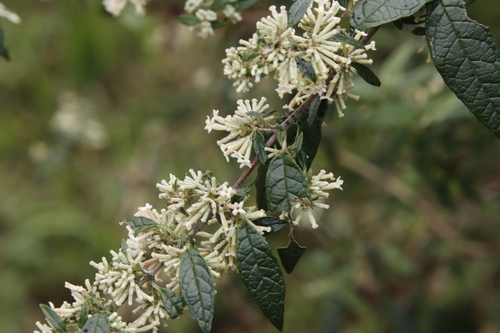
(c) Tony Rebelo, some rights reserved (CC BY-SA), uploaded by Tony Rebelo
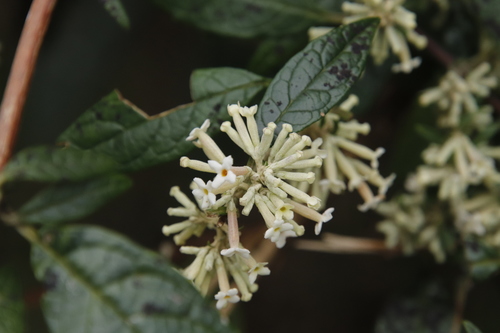
(c) Tony Rebelo, some rights reserved (CC BY-SA), uploaded by Tony Rebelo
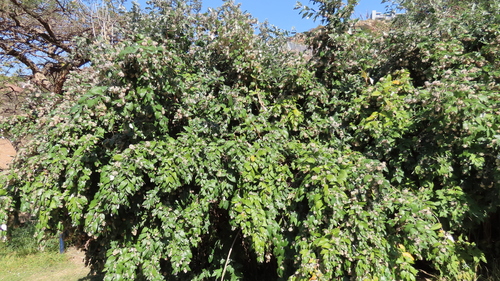
(c) draino, some rights reserved (CC BY-NC), uploaded by draino
What to Eat
Edible parts: Leaves - tea, Fruit
The leaves are used fresh or dried for tea, and the fruit is eaten as a snack.
Where to Find It
It is a subtropical plant. It grows on mountain slopes and rocky ravines. It can tolerate frost and drought. It is best in a sunny location.
Africa, Britain, East Africa, Eswatini, Europe, Mozambique, South Africa*, Southern Africa, Swaziland, Zambia, Zimbabwe,
How to Identify
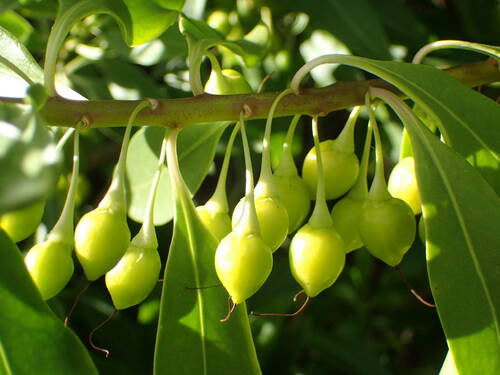
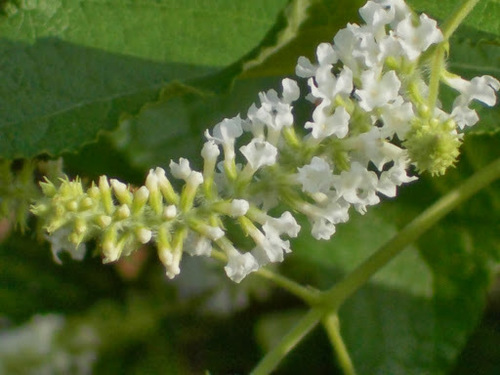
A shrub or tree. It grows 4 m high. The leaves are shiny and deep green above and silver underneath. The flowers are small but occur in large spikes. They are cream or orange and have a sweet smell. The fruit is a small capsule that splits when ripe.
How to Grow
It can be grown from hardwood cuttings.
Wikipedia
Source ↗Buddleja auriculata is an evergreen shrub endemic to Zimbabwe, Mozambique, and South Africa, growing in montane fields and thickets at elevations of 600–2,000 m. First collected by W. J. Burchell in 1813, and named by Bentham, the date of its introduction to western cultivation is not known, however it was accorded the Royal Horticultural Society Award of Merit in 1923.
Production
It is fast growing.
Notes
There are 90-100 Buddleja species. Also put in the family Buddlejaceae.
References (4)
- Fox, F. W. & Young, M. E. N., 1982, Food from the Veld. Delta Books. p 258
- Long, C., 2005, Swaziland's Flora - siSwati names and Uses http://www.sntc.org.sz/flora/
- Ruiters-Welcome, A. K., 2019, Food plants of southern Africa. Ph.D. thesis. Univ. of Johannesburg p 102
- Welcome, A. K. & Van Wyk, B.-E., 2019, An inventory and analysis of the food plants of southern Africa. South African Journal of Botany 122 (2019) 136–179