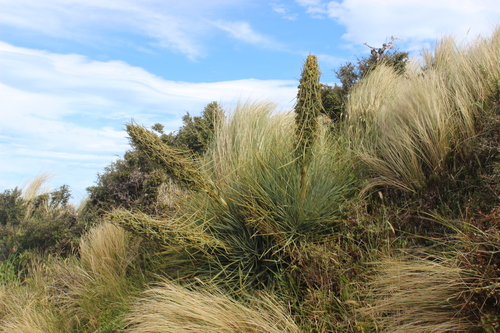
Pimpinella caffra
(Eckl. & Zeyh.) D. Dietr.
ApiaceaeLeaves

iNaturalist · cc-by-nc
(c) Alison Young, some rights reserved (CC BY-NC)
(c) Alison Young, some rights reserved (CC BY-NC)
iNaturalist · cc-by-nc
(c) Alison Young, some rights reserved (CC BY-NC)
(c) Alison Young, some rights reserved (CC BY-NC)

iNaturalist · cc-by-nc
(c) Alison Young, some rights reserved (CC BY-NC)
(c) Alison Young, some rights reserved (CC BY-NC)
What to Eat
Edible parts: Leaves
The leaves are cooked and eaten.
Where to Find It
It is a subtropical plant. It grows on grassy banks.
Africa, Eswatini, South Africa, Southern Africa, Swaziland,
Countries: Angola, Burkina Faso, Burundi, Benin, Botswana, Congo (DRC), Central African Republic, Congo (Republic), Cote d'Ivoire, Cameroon, Cape Verde, Djibouti, Algeria, Egypt, Eritrea, Ethiopia, Gabon, Ghana, Gambia, Guinea, Equatorial Guinea, Guinea-Bissau, Kenya, Comoros, Liberia, Lesotho, Libya, Morocco, Madagascar, Mali, Mauritania, Mauritius, Malawi, Mozambique, Namibia, Niger, Nigeria, Rwanda, Seychelles, Sudan, Sierra Leone, Senegal, Somalia, South Sudan, Sao Tome & Principe, Eswatini, Chad, Togo, Tunisia, Tanzania, Uganda, South Africa, Zambia, Zimbabwe
How to Identify
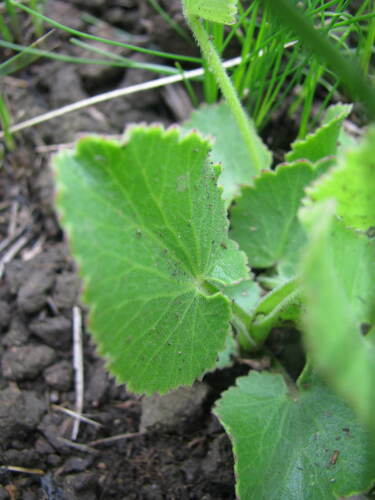
An erect slender herb. It grows 1 m tall. It has an aroma. The stems are circular and branched with some hairs. The leaves have slender stalks and the lower ones near the base are simple. They are oval or heart shaped with deep teeth. The leaves on the stems are deeply divided with leaflets along the stalk. The flowering stems have slender branches with a group of flowers with equal length stalks. The flowers are smal land 2 mm long. They are white. The fruit is oval or oblong with a disc at the top.
Names & Synonyms
Mohopu
Anisum caffrum Eckl. & Zeyh.
References (4)
- Fox, F. W. & Young, M. E. N., 1982, Food from the Veld. Delta Books. p 87
- Long, C., 2005, Swaziland's Flora - siSwati names and Uses http://www.sntc.org.sz/flora/
- Ruiters-Welcome, A. K., 2019, Food plants of southern Africa. Ph.D. thesis. Univ. of Johannesburg p 20
- Welcome, A. K. & Van Wyk, B.-E., 2019, An inventory and analysis of the food plants of southern Africa. South African Journal of Botany 122 (2019) 136–179