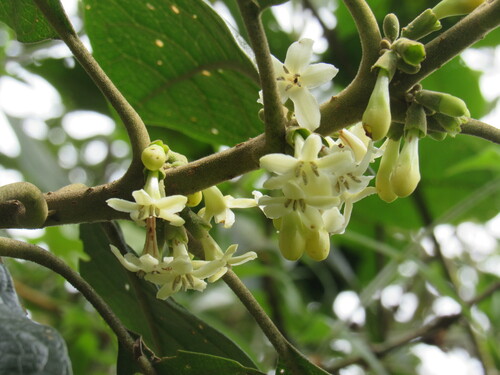
Plectranthus laxiflorus
Benth.
Citronella spur-flower, White spur flower
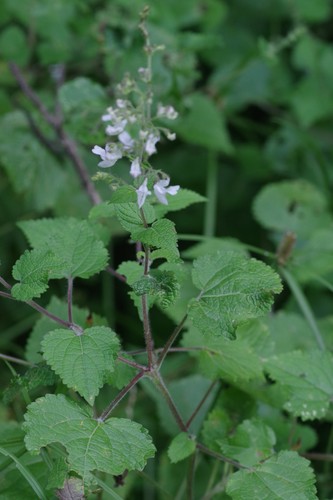
(c) Craig Peter, some rights reserved (CC BY-NC)
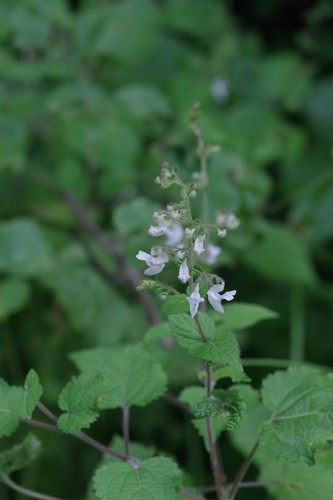
(c) Craig Peter, some rights reserved (CC BY-NC)
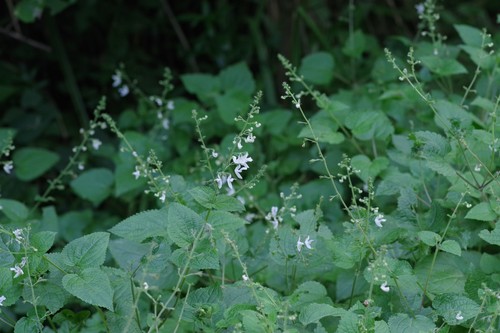
(c) Craig Peter, some rights reserved (CC BY-NC)
What to Eat
Edible parts: Tubers, Root, Leaves
The leaves are eaten as a vegetable, and the tubers and roots are also edible.
Where to Find It
It is a tropical plant. It grows between 15-1,800 m above sea level. It grows on the edges of forests and along shady river banks.
Africa, Angola. Central Africa, East Africa, Eswatini, Ethiopia, Mozambique, South Africa, Southern Africa, Swaziland, Tanzania, Zambia, Zimbabwe,
How to Identify
A herb. It grows up to 1.5 m high. The crushed leaves have a lemon (citronella) scent. The leaves are 6-10 cm long by 4-6 cm wide. The flowers are in groups of 3. They are white to pale mauve.
How to Grow
The leaves have a sharp citronella-like scent.
Propagation: Seed - sow in well-drained soil, covering lightly with a thin layer of sand, and place in a warm but shaded spot. The seed germinates in about three weeks. Cuttings of Plectranthus species generally root easily - soft tips root faster than semi-hardwood growth. The cuttings are best taken 60 - 100mm long with three or four nodes, making the cut just below a node. Place them in sand, perlite, vermiculite or peat, or any mixture of these, keep them moist and shaded and they should root in 2 - 3 weeks
Medicinal Uses
Plectranthus laxiflorus is a widely used medicinal plant in eastern Afica, being employed the treatment of a wide range of conditions. The plant is said to be abortifacient, antimicrobial, antirheumatic, odontalgic, ophthalmic, purgative and stomachic. The plant is often used to treat abdominal pain and a wide range of other digestive problems. A tea made from the leaves is taken as a treatment for coughs and colds. The plant is also used to treat rheumatism and psychological problems, including madness. It is used as an enema in the treatment of influenza, fevers and abdominal conditions. The crushed leaves and young stems are used to treat eye complaints The plant is rubbed on the skin as a treatment for leprosy. An infusion of the root is used as a mouthwash to treat loose and bleeding teeth and other gum disorders
Other Uses
The crushed leaves and stems are used as an insect repellant to keep mosquitoes away.
Names & Synonyms
Ubebebe, Ifuthane, Uhlolowane, Umadolwane, Umsuthuza
References (8)
- Burkill, H. M., 1985, The useful plants of west tropical Africa, Vol. 3. Kew.
- Fowler, D. G., 2007, Zambian Plants: Their Vernacular Names and Uses. Kew. p 81
- Fox, F. W. & Young, M. E. N., 1982, Food from the Veld. Delta Books. p 246
- Jardin, C., 1970, List of Foods Used In Africa, FAO Nutrition Information Document Series No 2.p 18 (As Plectranthus urticoides)
- Long, C., 2005, Swaziland's Flora - siSwati names and Uses http://www.sntc.org.sz/flora/
- Ruiters-Welcome, A. K., 2019, Food plants of southern Africa. Ph.D. thesis. Univ. of Johannesburg p 70
- Vagionas, K., et al, 2007, Chemical analysis of edible aromatic plants growing in Tanzania. Food Chemistry 105 (2007) 1711-1717
- Welcome, A. K. & Van Wyk, B.-E., 2019, An inventory and analysis of the food plants of southern Africa. South African Journal of Botany 122 (2019) 136–179