Limeum obovatum

Vicary

LimeaceaeSeeds/Nuts
Limeum obovatum
iNaturalist · cc-by-nc
(c) Radha Veach, some rights reserved (CC BY-NC)
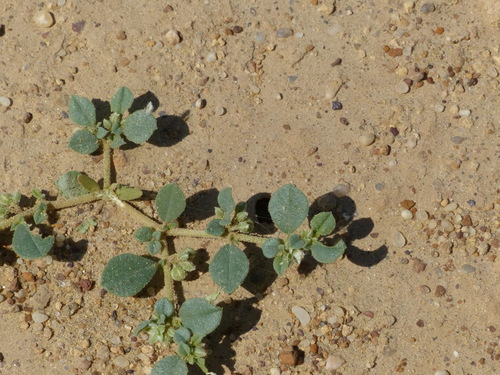
Limeum obovatum
iNaturalist · cc-by-nc
(c) Radha Veach, some rights reserved (CC BY-NC)
Limeum obovatum
iNaturalist · cc-by-nc
(c) dafnac, some rights reserved (CC BY-NC)

What to Eat

Edible parts: Seeds

The seeds are edible and have been used as a famine food.

Where to Find It

It is a tropical plant. It grows in desert regions in West Africa. It can grow in arid places. It grows up to 850 m above sea level.

Africa, Asia, Central Africa, Chad, Djibouti, Eritrea, India, Mali, Mauritania, Middle East, Niger, North Africa, Pakistan, Sahel, Saudi Arabia, Sudan, West Africa,

Countries: United Arab Emirates, Afghanistan, Armenia, Angola, Azerbaijan, Bangladesh, Burkina Faso, Bahrain, Burundi, Benin, Brunei, Bhutan, Botswana, Congo (DRC), Central African Republic, Congo (Republic), Cote d'Ivoire, Cameroon, China, Cape Verde, Djibouti, Algeria, Egypt, Eritrea, Ethiopia, Gabon, Georgia, Ghana, Gambia, Guinea, Equatorial Guinea, Guinea-Bissau, Indonesia, Israel, India, Iraq, Iran, Jordan, Japan, Kenya, Kyrgyzstan, Cambodia, Comoros, North Korea, South Korea, Kuwait, Kazakhstan, Laos, Lebanon, Sri Lanka, Liberia, Lesotho, Libya, Morocco, Madagascar, Mali, Myanmar, Mongolia, Mauritania, Mauritius, Maldives, Malawi, Malaysia, Mozambique, Namibia, Niger, Nigeria, Nepal, Oman, Philippines, Pakistan, Qatar, Rwanda, Saudi Arabia, Seychelles, Sudan, Singapore, Sierra Leone, Senegal, Somalia, South Sudan, Sao Tome & Principe, Syria, Eswatini, Chad, Togo, Thailand, Tajikistan, Timor-Leste, Turkmenistan, Tunisia, Turkey, Taiwan, Tanzania, Uganda, Uzbekistan, Vietnam, Yemen, South Africa, Zambia, Zimbabwe

How to Identify

A herb that grows from seed each year. It lies along the ground. The stems can become woody near the base. The stems are 40 cm long and branched. The leaves are opposite and broadly oval to round. The flowers occur at the nodes and do not have stalks.

Medicinal Uses

The plant is used for the treatment of burns.

Other Information

The seeds are a famine food.

Notes

They are also put in the family Molluginaceae.

Names & Synonyms
Limeum indicum Stocks ex T. Anderson
References (3)
  • Burkill, H. M., 1985, The useful plants of west tropical Africa, Vol. 1. Kew.
  • Ferns, Tropical Plants Database.
  • World Checklist of Useful Plant Species 2020. Royal Botanic Gardens, Kew
More from Limeaceae