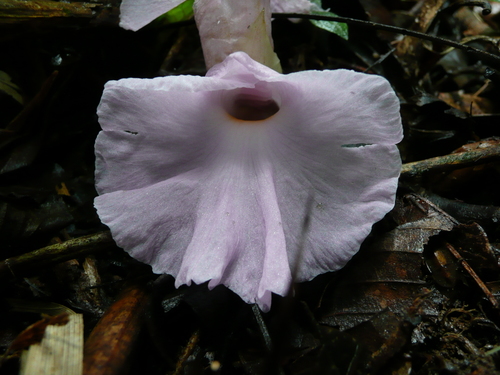
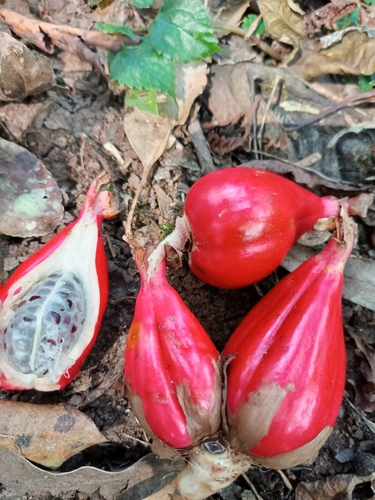
Siphonochilus nigericus
(Hepper) B. L. Burtt
Resurrection lily

gbif · cc-by-nc-sa
MBG
MBG

gbif · cc-by
Royal Botanic Gardens, Kew
Royal Botanic Gardens, Kew

gbif · cc-by
Royal Botanic Gardens, Kew
Royal Botanic Gardens, Kew
What to Eat
Edible parts: Tuber - flavouring, Root, Spice
The tubers are used as a flavouring and spice, with a slight ginger taste.
Where to Find It
It is a tropical plant. It grows in open woodland and wooded grassland. In Nigeria it occurs near 1,000 m above sea level.
Africa, Benin, Gambia, Ghana, Nigeria, Sierra Leone, West Africa,
Countries: Angola, Burkina Faso, Burundi, Benin, Botswana, Congo (DRC), Central African Republic, Congo (Republic), Cote d'Ivoire, Cameroon, Cape Verde, Djibouti, Algeria, Egypt, Eritrea, Ethiopia, Gabon, Ghana, Gambia, Guinea, Equatorial Guinea, Guinea-Bissau, Kenya, Comoros, Liberia, Lesotho, Libya, Morocco, Madagascar, Mali, Mauritania, Mauritius, Malawi, Mozambique, Namibia, Niger, Nigeria, Rwanda, Seychelles, Sudan, Sierra Leone, Senegal, Somalia, South Sudan, Sao Tome & Principe, Eswatini, Chad, Togo, Tunisia, Tanzania, Uganda, South Africa, Zambia, Zimbabwe
How to Identify
A ginger family herb. It has tuberous roots. Annual leafy stems rise from these.
Medicinal Uses
The tubers have traditional uses.
Names & Synonyms
Cienkowskiella nigerica (Hutch. ex Hepper) Y. K. KamKaempferia nigerica Hutch.
References (3)
- Burkill, H. M., 1985, The useful plants of west tropical Africa, Vol. 5. Kew.
- Chapman, J. D. & Chapman, H. M., 2001, The Forest Flora of Taraba and Andamawa States, Nigeria. WWF & University of Canterbury. p 213
- World Checklist of Useful Plant Species 2020. Royal Botanic Gardens, Kew