Adenia mannii
(Mast.) Engl.
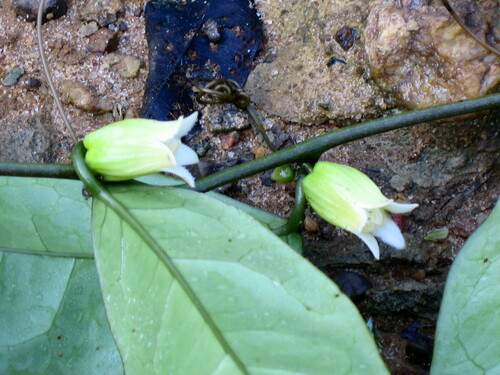
(c) Carel Jongkind, some rights reserved (CC BY-NC), uploaded by Carel Jongkind
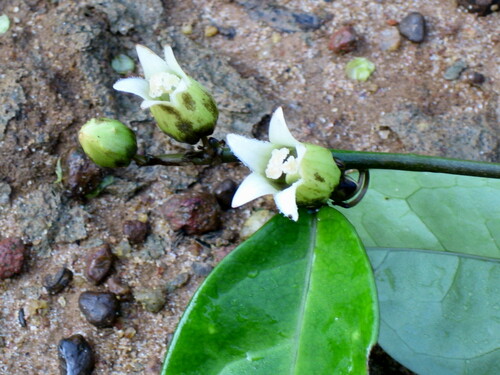
(c) Carel Jongkind, some rights reserved (CC BY-NC), uploaded by Carel Jongkind
What to Eat
Edible parts: Fruit - aril
The aril of the fruit is edible.
Where to Find It
It is a tropical plant. It grows in forest near marshes and in the coastal zone in West Africa. It grows up to 1,050 and 1,150 m above sea level.
Africa, Benin, Cameroon, Central Africa, Congo DR, East Africa, Ghana, Nigeria, Sierra Leone, Togo, Uganda, West Africa,
How to Identify
A slender climber. It can be 5 m tall. The leaves are pale green. They are 4-17 cm long by 2-7 cm wide. The flowering stalk is up to 12 cm long. There are 30 male flowers and 10 female flowers. There are 1-3 tendrils that can be up to 15 cm long. The flowers are tube shaped. There are 1-6 fruit in a group. They are narrow and angular. There are 20-30 seeds.
Notes
There are 95 Adenia species. They are common in the semiarid regions of Africa.
Names & Synonyms
References (3)
- Burkill, H. M., 1985, The useful plants of west tropical Africa, Vol. 4. Kew.
- Global Plants JSTOR
- World Checklist of Useful Plant Species 2020. Royal Botanic Gardens, Kew


