Mariscus alternifolius
Vahl
CyperaceaeRoots
What to Eat
Edible parts: Tuber, Culm base, Rhizome, Root
The rhizomes are eaten and used for flavouring. The swollen culm base is also consumed, along with the tubers and roots.
Where to Find It
A tropical plant. It grows in damp grassy places in West Africa.
Africa, Burkina Faso, Gambia, Nigeria, Senegal, Sierra Leone, West Africa,
Countries: Angola, Burkina Faso, Burundi, Benin, Botswana, Congo (DRC), Central African Republic, Congo (Republic), Cote d'Ivoire, Cameroon, Cape Verde, Djibouti, Algeria, Egypt, Eritrea, Ethiopia, Gabon, Ghana, Gambia, Guinea, Equatorial Guinea, Guinea-Bissau, Kenya, Comoros, Liberia, Lesotho, Libya, Morocco, Madagascar, Mali, Mauritania, Mauritius, Malawi, Mozambique, Namibia, Niger, Nigeria, Rwanda, Seychelles, Sudan, Sierra Leone, Senegal, Somalia, South Sudan, Sao Tome & Principe, Eswatini, Chad, Togo, Tunisia, Tanzania, Uganda, South Africa, Zambia, Zimbabwe
How to Identify
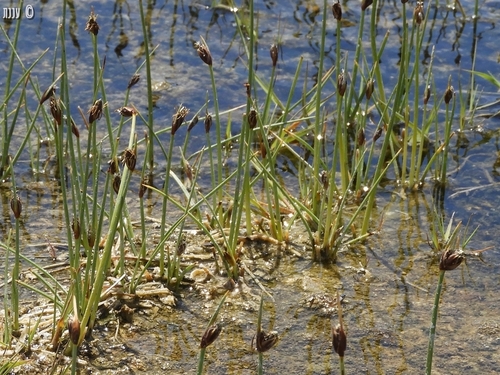
A sedge. These grow in clumps and have grass like leaves and solid stalks. The culms are swollen at the base. There are underground stems or rhizomes.
Names & Synonyms
Ataku mainya, Samikoko, Tiokom tiokom
Mariscus umbellatus Vahl
References (5)
- Burkill, H. M., 1985, The useful plants of west tropical Africa, Vol. 1. Kew.
- Enum. pl. 2:376. 1805
- Gallagher, D. E., 2010, Farming beyond the escarpment: Society, Environment, and Mobility in Precolonial Southeastern Burkina Faso. PhD University of Michigan.
- Grivetti, L. E., 1980, Agricultural development: present and potential role of edible wild plants. Part 2: Sub-Saharan Africa, Report to the Department of State Agency for International Development. p 24 (As Mariscus umbellatus)
- Jardin, C., 1970, List of Foods Used In Africa, FAO Nutrition Information Document Series No 2.p 89 (As Mariscus umbellatus)
More from Cyperaceae

Actinoscirpus grossus
Giant bulrush, Greater club-rush

Actinoscirpus grossus var. kysoor
Amphiscirpus nevadensis
Nevada bulrush, Great basin bulrush

Bolboschoenus caldwellii
Sea club rush, Marsh club rush, Seaside bulrush

Bolboschoenus fluviatilis
Marsh club rush, River bulrush, Kukuraho, Purua grass

Bolboschoenus glaucus