Panicum walense
Mez
PoaceaeSeeds/Nuts
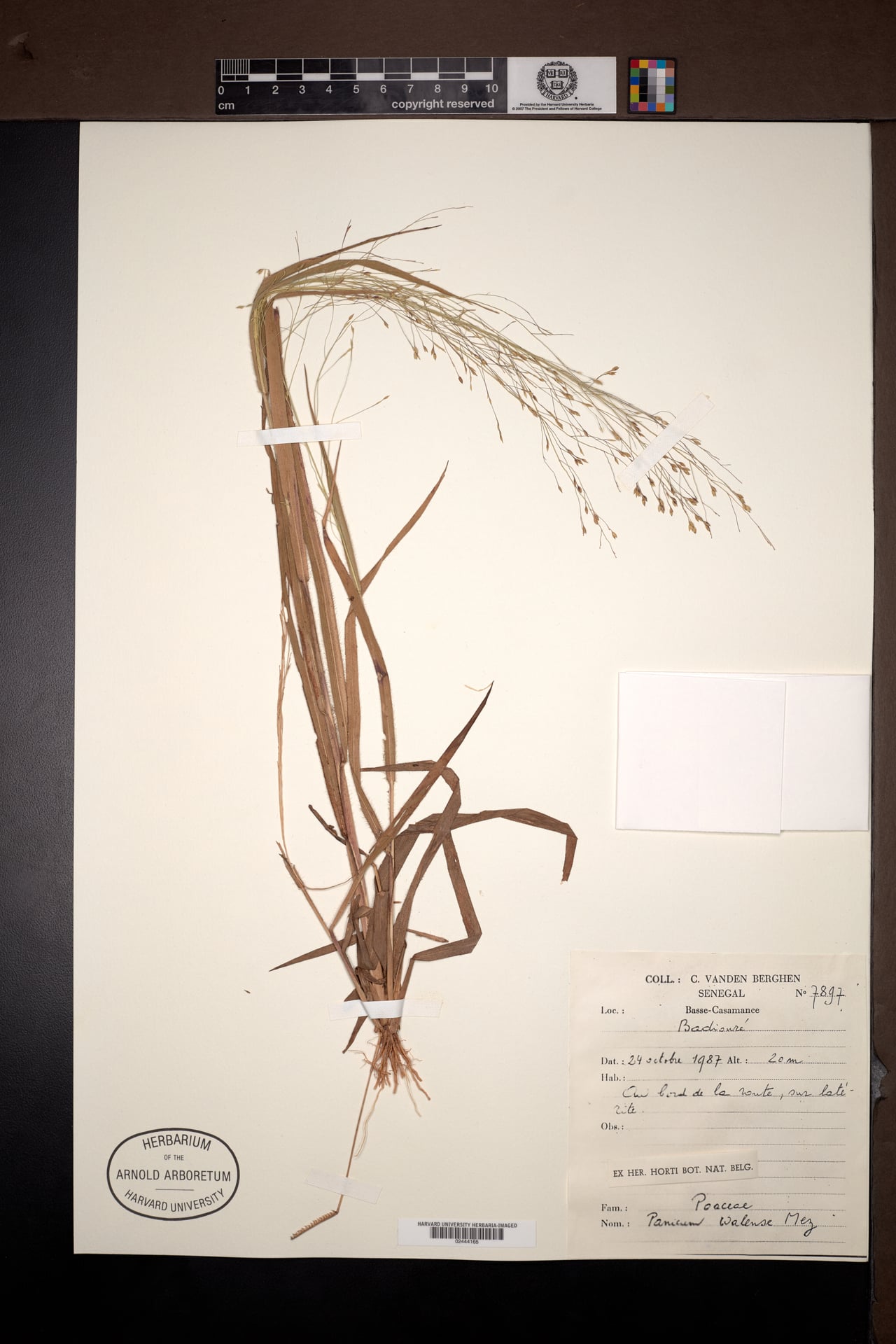
gbif · cc0
President and Fellows of Harvard College
President and Fellows of Harvard College
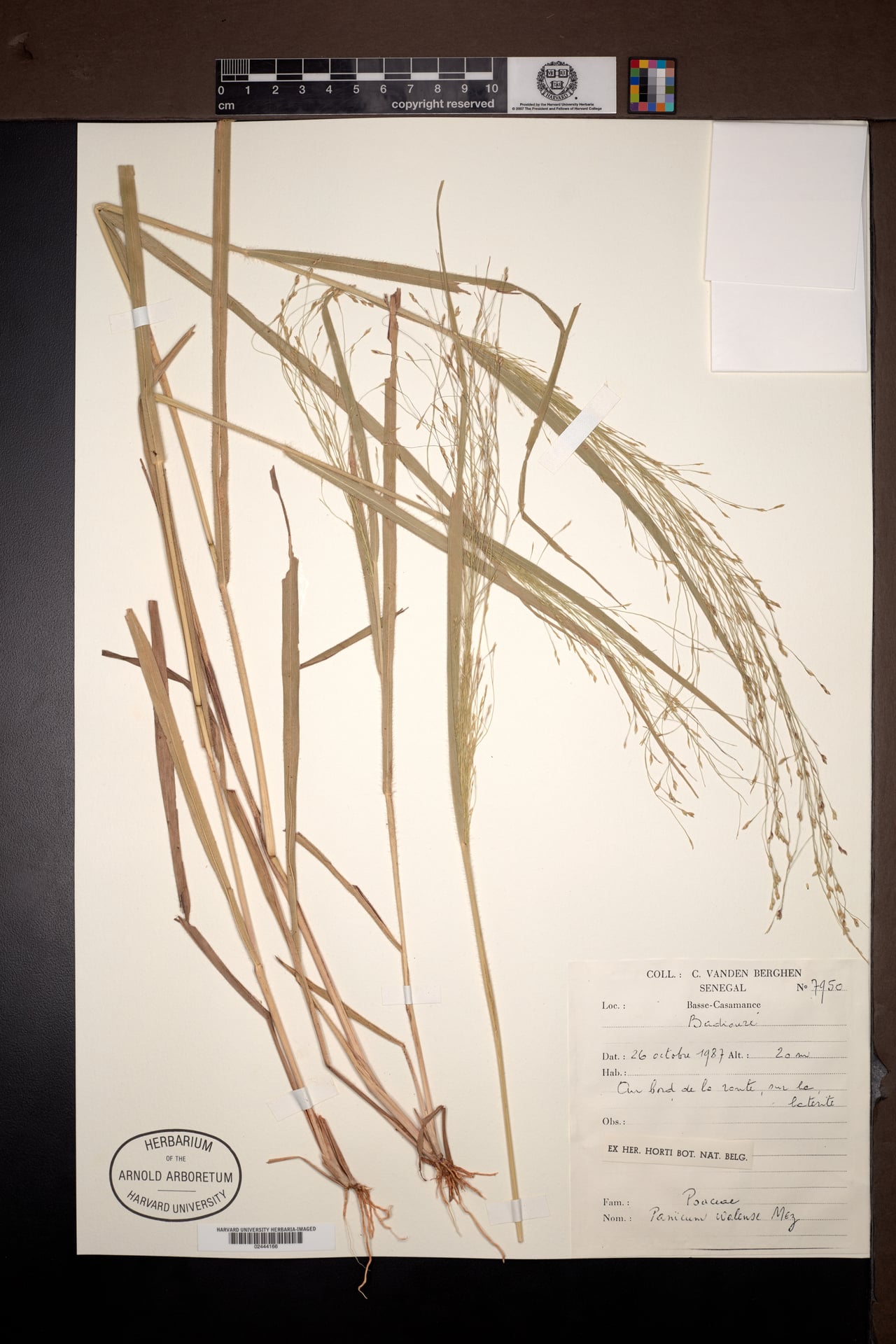
gbif · cc0
President and Fellows of Harvard College
President and Fellows of Harvard College
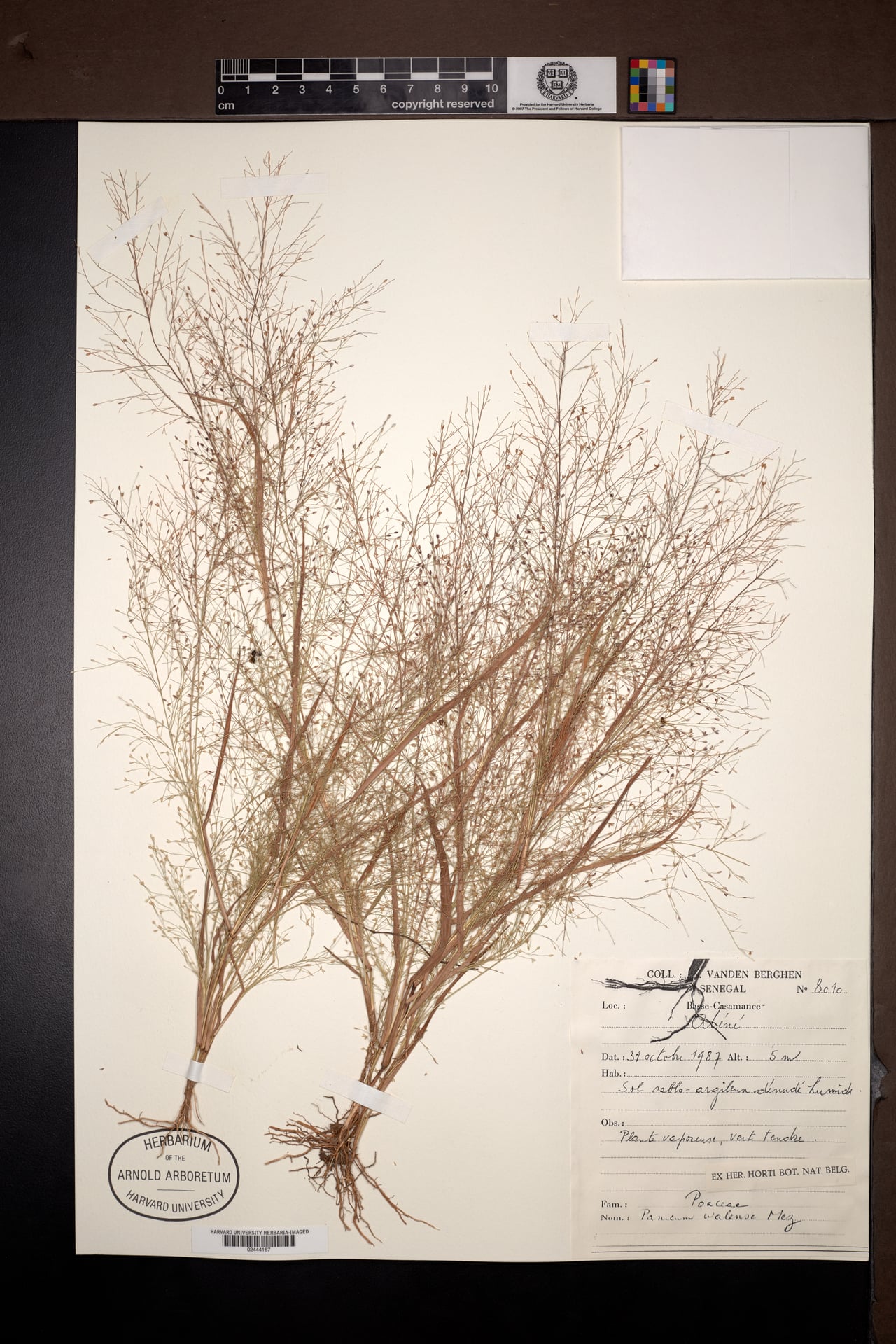
gbif · cc0
President and Fellows of Harvard College
President and Fellows of Harvard College
What to Eat
Edible parts: Seeds, Grain, Cereal
The seeds and grain are edible and used as a cereal, though it is considered a minor or famine food.
Where to Find It
It is a tropical plant. It often forms dense cover on shallow moist soils in West Africa. It grows in wet grass savannah.
Africa, Asia, China, East Africa, Guinea, Guinée, Guinea-Bissau, India, Malaysia, Nigeria, SE Asia, Senegal, Sierra Leone, Sudan, Tanzania, West Africa, Zambia,
Countries: United Arab Emirates, Afghanistan, Armenia, Angola, Azerbaijan, Bangladesh, Burkina Faso, Bahrain, Burundi, Benin, Brunei, Bhutan, Botswana, Congo (DRC), Central African Republic, Congo (Republic), Cote d'Ivoire, Cameroon, China, Cape Verde, Djibouti, Algeria, Egypt, Eritrea, Ethiopia, Gabon, Georgia, Ghana, Gambia, Guinea, Equatorial Guinea, Guinea-Bissau, Indonesia, Israel, India, Iraq, Iran, Jordan, Japan, Kenya, Kyrgyzstan, Cambodia, Comoros, North Korea, South Korea, Kuwait, Kazakhstan, Laos, Lebanon, Sri Lanka, Liberia, Lesotho, Libya, Morocco, Madagascar, Mali, Myanmar, Mongolia, Mauritania, Mauritius, Maldives, Malawi, Malaysia, Mozambique, Namibia, Niger, Nigeria, Nepal, Oman, Philippines, Pakistan, Qatar, Rwanda, Saudi Arabia, Seychelles, Sudan, Singapore, Sierra Leone, Senegal, Somalia, South Sudan, Sao Tome & Principe, Syria, Eswatini, Chad, Togo, Thailand, Tajikistan, Timor-Leste, Turkmenistan, Tunisia, Turkey, Taiwan, Tanzania, Uganda, Uzbekistan, Vietnam, Yemen, South Africa, Zambia, Zimbabwe
How to Identify
A slender annual grass. It grows 60 cm high. The leaf blade is 7-20 cm long. The spikelets are about 2 mm long.
Other Information
It is a famine or minor food.
References (2)
- Burkill, H. M., 1985, The useful plants of west tropical Africa, Vol. 2. Kew.
- Flora Zambesiaca. http://apps.kew.org/efloras


