Cantharellus subalbidus
A. H. Sm. & Morse
White chanterelle
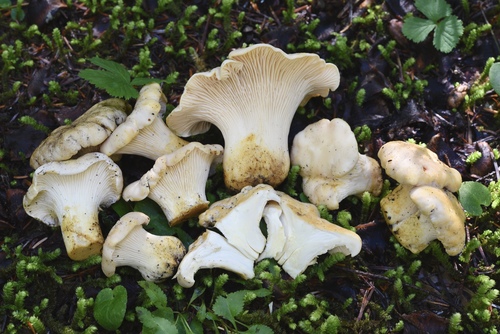
(c) Richard Tehan, some rights reserved (CC BY-NC-SA), uploaded by Richard Tehan

(c) Alan Rockefeller, some rights reserved (CC BY)
What to Eat
Edible parts: Mushroom, Fungus, Vegetable
A choice edible mushroom, it can be prepared by being sautéed or cutting into chunks and baking at 350 °F (177 °C) for 10 minutes.
Dangerous Lookalikes
This plant can be confused with the following toxic species. Always verify identification carefully before consuming any wild plant.


Jack-O'-Lantern Mushroom: True knife-like gills, grows in clusters on wood/stumps, glows in the dark, orange throughout.
White chanterelle: Blunt forked ridges (not true gills), grows singly from soil, apricot/fruity smell, solid flesh.
Where to Find It
California. In Nepal it grows in moist places in mixed forests.
Asia, Canada, China, Himalayas, Nepal, North America, USA,
How to Identify
A mushroom. The cap is dull white and the flesh firm and dense.
Wikipedia
Source ↗Cantharellus subalbidus, the white chanterelle, is a species of fungus native to western North America. It is a member of the genus Cantharellus along with other popular edible chanterelles.
Other Information
Mushrooms are sold in markets in Nepal.
Names & Synonyms
Ura shyamo, Baijiyoujun
References (7)
- Adhikari, M. K., 2014, Addition and correction to the knowledge on edibility of wild mushrooms in Nepal: a discussion. Bul. Dept. Pl. Res. N. 36, Nepal p 4
- Boa, E. R., 2004, Wild edible fungi and their importance to people. FAO Non Wood Forest Products Booklet 17
- Facciola, S., 1998, Cornucopia 2: a Source Book of Edible Plants. Kampong Publications, p 251
- http://www.mykoweb.com/CAF/edible.html
- Joshi, K. and Joshi, A. R., 2008, Ethnobotanical Studies on Some Lower Plants of the Central Development Region, Nepal. Ethnobotanical Leaflets 12:832-40
- Kaye, G.C., 1986, Wild and Exotic Mushroom Cultivation in North America
- Schneider, E., 2001, Vegetables from Amaranth to Zucchini: The essential reference. HarperCollins. p 169


