Psydrax suaveolens
(S. Moore) S. T. Reynolds & R. J. F. Hend.
RubiaceaeFruit
iNaturalist · cc-by-nc
(c) gmgoods, some rights reserved (CC BY-NC), uploaded by gmgoods
(c) gmgoods, some rights reserved (CC BY-NC), uploaded by gmgoods
iNaturalist · cc-by-nc
(c) tiaberro, some rights reserved (CC BY-NC), uploaded by tiaberro
(c) tiaberro, some rights reserved (CC BY-NC), uploaded by tiaberro
iNaturalist · cc-by-nc
(c) gmgoods, some rights reserved (CC BY-NC), uploaded by gmgoods
(c) gmgoods, some rights reserved (CC BY-NC), uploaded by gmgoods
What to Eat
Edible parts: Fruit
The fruit is edible.
Where to Find It
It needs to grow in well drained soil and a sunny position. It can grow in arid places.
How to Identify
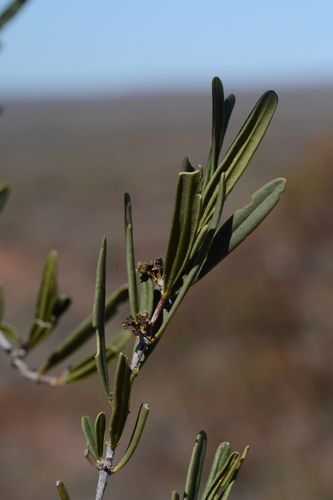
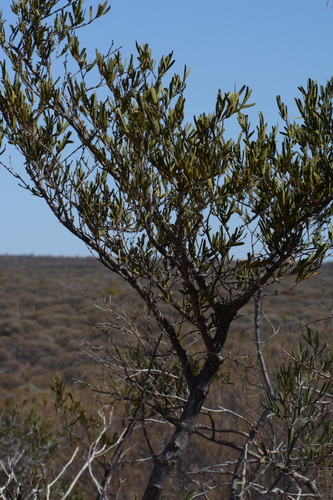
A small stiff shrub. It grows 0.5-1 m high and spreads 1-1.5 m wide. The branches are spreading and smooth. The leaves are 2-3.5 cm long by 0.5 cm wide. They are broad and narrow. The edges are thickened and curved backwards. The flowers are about 0.5 cm across. They are white and in loose clusters. The fruit is fleshy and has a hard stone inside. It is 0.8 cm across and black.
Production
There are about 200 Canthium species.
Names & Synonyms
Wanalja, Wannalyyangu
Canthium lineare PritzelCanthium suaveolens S. MoorePlectronia linearis (E. Pritz.) J. M. Black
References (4)
- Cancilla, D., 2018, Ethnobotanical and Ethnozoological Values Desktop Assessment - Eliwana Project. p 14
- Elliot, W.R., & Jones, D.L., 1982, Encyclopedia of Australian Plants suitable for cultivation. Vol 2. Lothian. p 457
- Latz, P.K., 1996, Bushfires and Bushtucker: Aboriginal plant use in Central Australia. IAD Press Alice Springs p
- www.theplantlist.org


