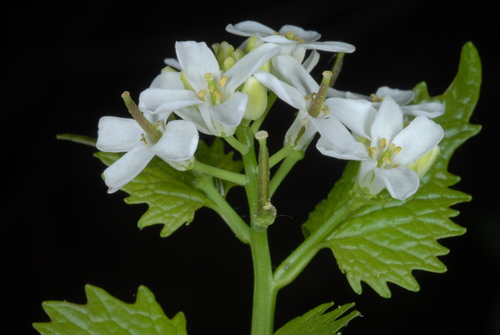
Cardamine pentaphyllos
(L.) Crantz
(c) Jason Grant, some rights reserved (CC BY), uploaded by Jason Grant

(c) Ina Siebert, some rights reserved (CC BY-NC)

(c) Stefan Gey, some rights reserved (CC BY-NC)
What to Eat
Edible parts: Flowers, Leaves
Leaves can be eaten raw or cooked — raw they have a bitter, cabbage-like flavour with a hint of radish, and are likely somewhat nicer when cooked. Flowers can be eaten raw and share the same bitter, cabbage-like flavour with a hint of radish.
Where to Find It
It is a temperate plant. It grows in mountainous areas in Europe. It grows in a range of soils. It is best in moist or wet soil.
Australia, Europe,
How to Identify
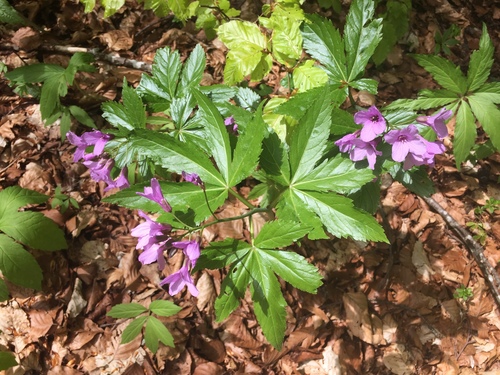
A cabbage family herb. It keeps growing from year to year. It grows 15-30 cm tall. The leaves are compound and bright green.
How to Grow
Plants are grown from seeds. Seeds germinate in 1-3 weeks at 15°C. Seedlings can be transplanted.
Propagation: Sow seed in spring in a cold frame; germination typically occurs within 1–3 weeks at 15°C. Once large enough to handle, prick seedlings into individual pots and grow on in light shade in a greenhouse or cold frame for the first two years, planting out when dormant in late summer. Divide in early spring or after the plant dies back in summer. Larger clumps can go directly into permanent positions, while smaller ones should be potted up and grown on in a cold frame until well rooted before planting out in spring.
Medicinal Uses
None known
Other Uses
None known
Wikipedia
Source ↗Cardamine pentaphyllos, the five-leaflet bitter-cress or showy toothwort, is a flowering plant in the family Brassicaceae, native to Western and Central Europe in Slovenia and Croatia. It is an herbaceous perennial, growing to 30–50 cm (12–20 in), with palmate leaves and racemes of purple, pink or white flowers in late Spring and early Summer. The Latin specific epithet pentaphyllos means "with five-lobed leaves". The feminine form pentaphylla is sometimes seen, but this is deemed incorrect. This plant has gained the Royal Horticultural Society's Award of Garden Merit.
Notes
There are about 160 Cardamine species. They are mostly in damp places in temperate regions.
References (2)
- Plants for a Future database, The Field, Penpol, Lostwithiel, Cornwall, PL22 0NG, UK. http://www.pfaf.org
- Ryan, S., 2008, Dicksonia. Rare Plants Manual. Hyland House. p 98