Commiphora giessii
J. J. A. van der Walt
Brown-stemmed corkwood

(c) Francois du Randt, some rights reserved (CC BY-NC), uploaded by Francois du Randt
no rights reserved
no rights reserved
What to Eat
Edible parts: Stems
The stems are chewed for their moisture content.
Where to Find It
It is a subtropical plant. It grows in hot arid areas. It grows in places with a marked dry season. It grows in areas with an annual rainfall of 50-200 mm. It grows in well drained rocky soils. In southern Africa it grows between 400-800 m above sea level. It can tolerate drought. It can grow in arid places.
Africa, Namibia, Southern Africa,
How to Identify
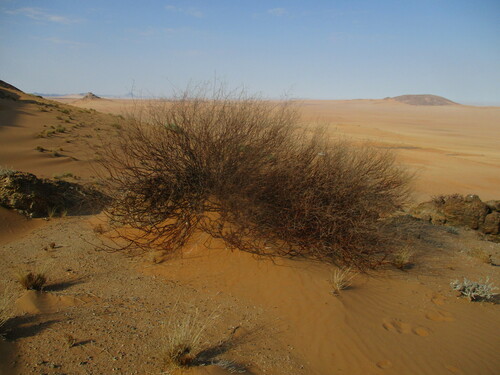
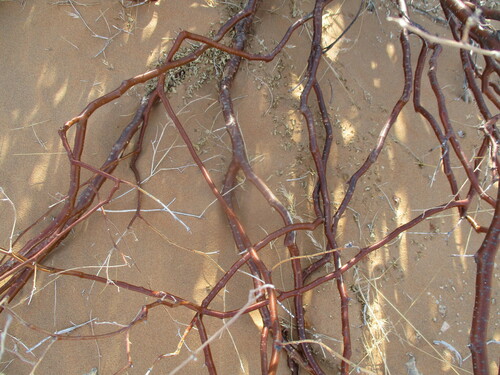
A shrub. It loses its leaves during the year. It grows 1-3 m high. The bark is smooth and shiny. The leaves have 3 leaflets. The leaflets do not have stalks. Male and female flowers are on separate plants. The flowers are small and red or green. The fruit is almost round.
How to Grow
It can be cut back and will re-grow.
Names & Synonyms
Laoab, Omuhatji, Toro
References (1)
- Royal Botanic Gardens, Kew (1999). Survey of Economic Plants for Arid and Semi-Arid Lands (SEPASAL) database. Published on the Internet; http://www.rbgkew.org.uk/ceb/sepasal/internet [Accessed 4th April 2011]


