Commiphora multijuga
(Hiern.) K. Schum.
Purple-stem corkwood
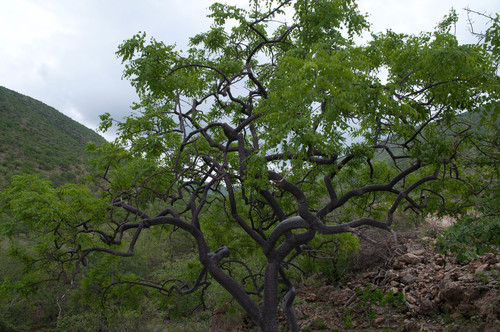
(c) Francois du Randt, some rights reserved (CC BY-NC), uploaded by Francois du Randt
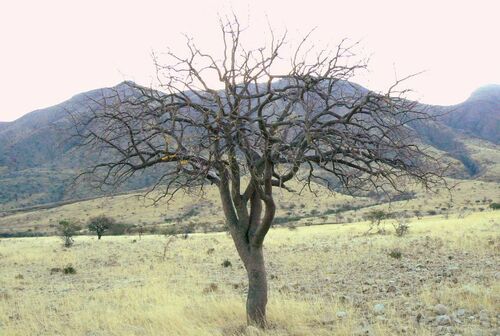
(c) lougarou, some rights reserved (CC BY-NC)
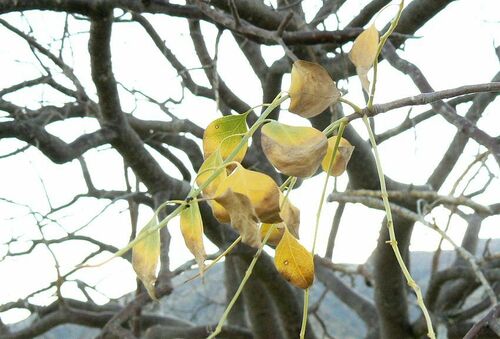
(c) lougarou, some rights reserved (CC BY-NC)
What to Eat
Edible parts: Stems - drink
The stems can be consumed as a drink.
Known Hazards
Where to Find It
It is a tropical plant. It cannot tolerate frost. It grows in areas with a marked dry season. It grows in areas with an annual rainfall between 50-450 mm. It grows on sandy or stony soils. In southern Africa it grows between 100-1,080 m above sea level. It can grow in arid places.
Africa, Angola, Central Africa, Namibia, Southern Africa,
How to Identify
A broad leaved tree. It grows 2-8 m high. The bark is smooth and red brown. The leaves are compound. They have leaflets along the stalk and one at the end. They are 3-8 pairs of leaflets. The leaflets droop. They are oval and 1-3 cm long by 1-2 cm wide. The leaflets are dark green on both surfaces. Male and female flowers are on separate plants. The flowers are cream or yellow. The petals are curved outwards. The fruit is a round berry. It is 15 mm across.
How to Grow
It can be cut back and will re-grow.
Notes
An edible caterpillar (Usta wallendrenii) eats the leaves.
Names & Synonyms
Omuzumba, Tsans
References (2)
- Royal Botanic Gardens, Kew (1999). Survey of Economic Plants for Arid and Semi-Arid Lands (SEPASAL) database. Published on the Internet; http://www.rbgkew.org.uk/ceb/sepasal/internet [Accessed 5th April 2011]
- World Checklist of Useful Plant Species 2020. Royal Botanic Gardens, Kew


