Rotheca uncinata
(Schinz) P. P. J. Herman & Retief
Cat's claw

(c) Zein et Carlo, some rights reserved (CC BY-NC)

(c) Riana Fourie, some rights reserved (CC BY-NC)

(c) Riana Fourie, some rights reserved (CC BY-NC)
What to Eat
Edible parts: Fruit
The fruit are eaten raw.
Where to Find It
It is a tropical plant. It grows in well-drained sandy soils. It can grow in places with a dry season of 6-11 months. It grows between 915-1,310 m above sea level. It can grow in arid places.
Africa, Angola, Botswana, Central Africa, Congo, East Africa, Gabon, Malawi Namibia, Southern Africa, Zambia, Zimbabwe,
How to Identify
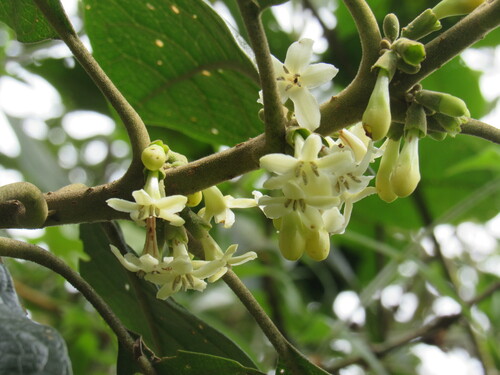
A small shrub. It grows 1.2 m high. The stems are spiny. They have 2 hooked thorns at the base of every leaf. The leaves are opposite and oval. They taper towards the tip. The flowers are bright red. They are 15 mm long. The fruit have an unpleasant smell. The fruit are 1-2 cm across. They turn from green to black when ripe.
Names & Synonyms
Dareh, Lukato, Namuteketa
References (1)
- Royal Botanic Gardens, Kew (1999). Survey of Economic Plants for Arid and Semi-Arid Lands (SEPASAL) database. Published on the Internet; http://www.rbgkew.org.uk/ceb/sepasal/internet [Accessed 19th April 2011]