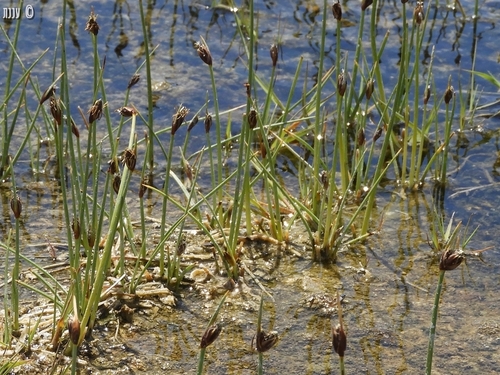
Carex macrocephala
Willd. ex Spreng.

(c) mvenos, some rights reserved (CC BY-NC)

(c) Tab Tannery, some rights reserved (CC BY-NC-SA)

(c) mvenos, some rights reserved (CC BY-NC)
What to Eat
Edible parts: Root, Seeds
The root can be eaten cooked. The seed is also edible and is described as very nutritious, though it is small and fiddly to use.
Where to Find It
It grows in sandy coastal areas.
Alaska, Asia, China, Japan, North America, USA,
How to Identify
A low-growing perennial sedge reaching 0.2 m (8 inches) tall. Flowers April to May with seeds ripening June to August. Monoecious with wind pollination. Adapts to light sandy, medium loamy, and heavy clay soils across mildly acid to basic pH ranges. Grows in semi-shade or full sun and prefers moist to wet conditions. Tolerates maritime exposure.
How to Grow
We have very little information on this species and do not know if it will be hardy in Britain, though judging by its native range it should succeed outdoors in most parts of this country. It is likely to tolerate maritime exposure. The following notes are based on the general needs of the genus. Easily grown in a damp to wet soil in full sun or shade. Members of this genus are rarely if ever troubled by browsing deer.
Propagation: Sow seed in situ in spring in moist soil in light shade. If seed is scarce, sow in a cold frame and plant out in summer. Seed typically germinates in 2–6 weeks at 15°C. Divide in spring — larger clumps can go directly into permanent positions, but smaller clumps are best potted up and grown on in a cold frame until rooting well, then planted out in summer or the following spring.
Medicinal Uses
None known.
Other Uses
None known.
Wikipedia
Source ↗Carex macrocephala, the big-head sedge or largehead sedge, is a species of flowering plant in the family Cyperaceae. It is found on the beaches and dunes of the northern Pacific; Japan, Primorsky Krai, Sakhalin, the Kurils and Kamchatka in the Russian Far East, and Alaska, British Columbia, Washington state and Oregon in North America.
Notes
There are about 2000 Carex species. There are 200 species in tropical America. It is used in medicine.
Names & Synonyms
References (4)
- Bowser, M., 2017, Handout on Edible Plants of the Kenai Peninsula. USFWS Kenai National Wildlife Refuge p 12
- Plants for a Future database, The Field, Penpol, Lostwithiel, Cornwall, PL22 0NG, UK. http://www.scs.leeds.ac.uk/pfaf/
- Simpson, D. A. & Inglis, C. A., 2001, Cyperaceae of Economic, Ethnobotanical and Horticultural Importance: A checklist. Kew Bulletin Vol. 56, No. 2 (2001), pp. 257-360
- Syst. veg. 3:808. 1826
More from Cyperaceae