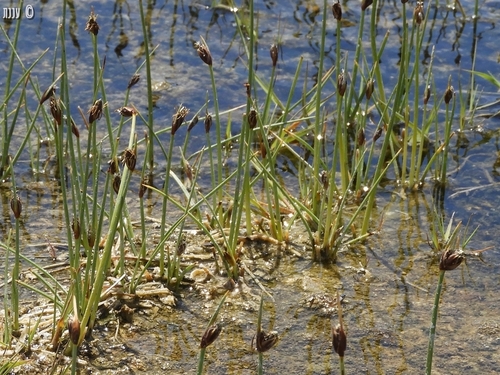
Carex rostrata
Stokes
Bearded sedge, Beaked sedge
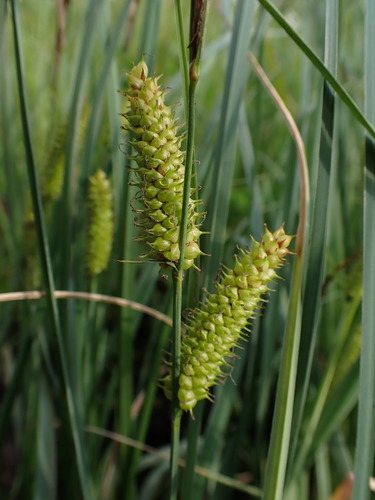
(c) Дмитрий А. Филиппов, some rights reserved (CC BY-NC), uploaded by Дмитрий А. Филиппов
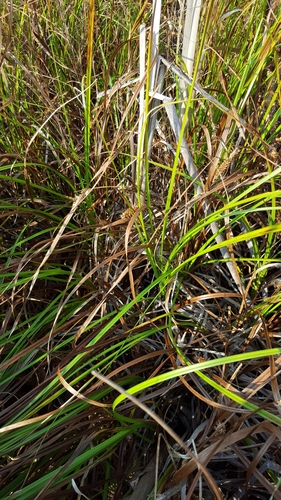
(c) François Rousseu, some rights reserved (CC BY-NC)

(c) Susan, some rights reserved (CC BY-NC), uploaded by Susan
What to Eat
Edible parts: Root, Seeds
The root can be eaten cooked, and the seed is also edible. No further details are given on preparation, though the seed is notably small and fiddly to use.
Where to Find It
It is a temperate plant. It grows in swamps and meadows in high mountain regions in north China at about 2,400 m above sea level.
Asia, Britain, Canada, China, Europe, Greenland, Korea, Luxembourg, Mongolia, North America, Russia, Slovenia, USA,
How to Identify
A sedge. These grow in clumps and have grass like leaves and solid stalks. The rhizome has long stout stolons or runners. The stems are 40-100 cm tall. They are 3 sided. The leaves are grey-green and 2-5 mm wide. They are flat and stiff. There are 3-6 flowering spikes. The seeds are brown and have a loose covering. They are 3 sided and 1.5 mm long.
How to Grow
Easily grown in a damp to wet soil in full sun or shade. Members of this genus are rarely if ever troubled by browsing deer.
Propagation: Sow seed in situ in spring in moist soil in light shade. If seed is scarce, sow in a cold frame and plant out in summer. Seed typically germinates in 2–6 weeks at 15°C. Divide plants in spring — large clumps can go directly into permanent positions, while smaller clumps are best potted up in a cold frame until well rooted, then planted out in summer or the following spring.
Medicinal Uses
No medicinal uses are known for this plant.
Other Uses
The straw is used as bedding material.
Wikipedia
Source ↗Carex rostrata, the bottle sedge or beaked sedge, is a perennial species of sedge in the family Cyperaceae.
Notes
There are about 2000 Carex species. There are 200 species in tropical America.
Names & Synonyms
Kljunasti šaš
References (4)
- Olivia & Co.
- Plants for a Future database, The Field, Penpol, Lostwithiel, Cornwall, PL22 0NG, UK. http://www.scs.leeds.ac.uk/pfaf/
- Simpson, D. A. & Inglis, C. A., 2001, Cyperaceae of Economic, Ethnobotanical and Horticultural Importance: A checklist. Kew Bulletin Vol. 56, No. 2 (2001), pp. 257-360
- W. Withering, Bot. arr. Brit. pl. ed. 2, 2:1059. 1787
More from Cyperaceae