Tragus racemosus
(L.) All.
Carrot seed grass
(c) Douglas Goldman, some rights reserved (CC BY-SA), uploaded by Douglas Goldman
(c) Douglas Goldman, some rights reserved (CC BY-SA), uploaded by Douglas Goldman
(c) John Pereira, some rights reserved (CC BY-NC), uploaded by John Pereira
What to Eat
Edible parts: Seeds, Cereal
Because Tragus racemosus is a grass, it can be used to reduce soil erosion in areas where it is native to. Species of the Tragus genus, including Tragus racemosus, are not suitable grasses for grazing. If these plants are found in abundance, it could suggest overgrazing, in which the other grasses suitable for grazing are eaten, eliminating competition and allowing Tragus racemosus to grow in larger quantities.
Where to Find It
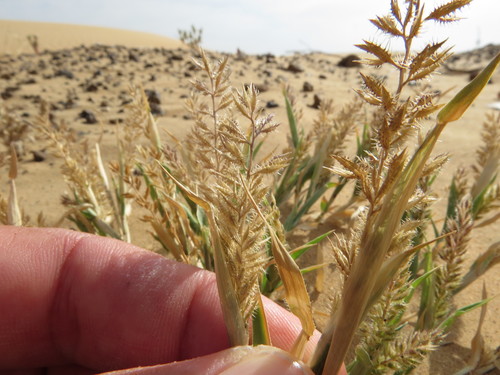
It is a Mediterranean climate plant. It grows in shallow stony soils. It grows between 600-2,600 m above sea level. It grows in areas with an annual rainfall between 250-500 mm. It can grow in arid places. In Argentina it grows below 500 m above sea level.
Africa, Arabia, Argentina, Australia, Botswana, Burkina Faso, East Africa, Mediterranean, Middle East, Oman, Saudi Arabia, Somalia, South Africa, Southern Africa, South America, United Arab Emirates, UAE, Yemen, Zimbabwe,
How to Identify
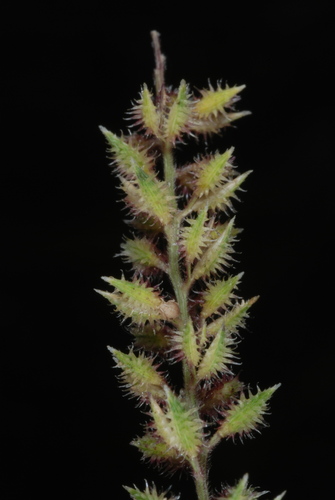
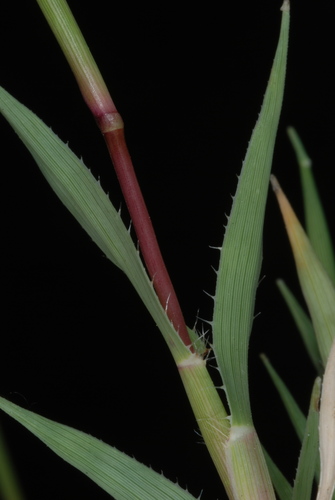
A herb. It is an annual grass. It grows 25 cm high. The leaves have stiff hairs along the edge. The flowers are spiny. They are in spikes 7 cm long.
Wikipedia
Source ↗Tragus racemosus, commonly referred to as stalked bur grass, European bur grass, or large carrot seed grass, is a species of grass native to Europe. It is often confused with a similar plant of the same genus, Tragus berteronianus. It is a monocot and is considered a weed in many countries and is a relatively uncommon seed contaminant.
Names & Synonyms
Nagaadh, Xarfo
References (1)
- Royal Botanic Gardens, Kew (1999). Survey of Economic Plants for Arid and Semi-Arid Lands (SEPASAL) database. Published on the Internet; http://www.rbgkew.org.uk/ceb/sepasal/internet [Accessed 4th June 2011]


