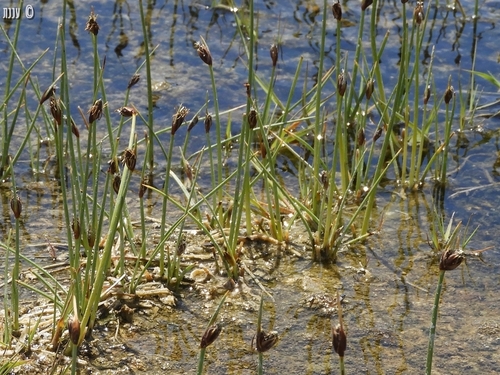
Carex utriculata
Boott
Northwest Territory sedge

(c) Susan, some rights reserved (CC BY-NC), uploaded by Susan
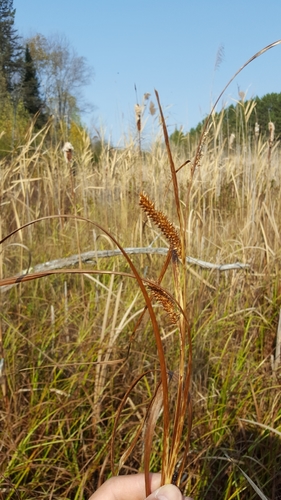
(c) François Rousseu, some rights reserved (CC BY-NC)
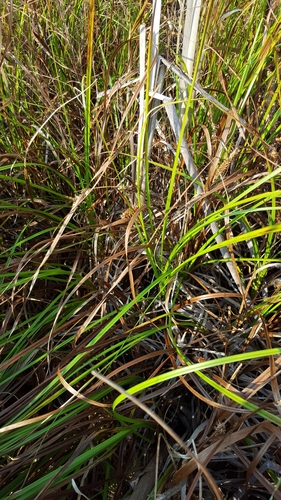
(c) François Rousseu, some rights reserved (CC BY-NC)
What to Eat
Edible parts: Root, Seeds
The pith of the stem can be eaten raw or cooked and has a sugary taste. The roots and tuberous stem bases are edible cooked and were eaten by children. The seed is also edible, though it is small and fiddly to use, and no further preparation details are given.
Where to Find It
A temperate plant.
Alaska, North America, USA,
How to Identify
Carex utriculata is a perennial sedge growing to 1.2 m tall. Seeds ripen from July to August. The plant is monoecious and wind-pollinated. It adapts to light sandy, medium loamy, or heavy clay soils with mildly acidic to basic pH. It tolerates semi-shade in light woodland or full sun and strongly prefers wet soil; it can even grow in standing water.
How to Grow
We have very little information on this species and do not know if it will be hardy in Britain, though judging by its native range it should succeed outdoors in most parts of this country. The following notes are based on the general needs of the genus. Easily grown in a damp to wet soil in full sun or shade. Members of this genus are rarely if ever troubled by browsing deer.
Propagation: Sow seed in situ in spring in moist soil in light shade. If seed is scarce, sow in a cold frame and plant out in summer. Seed typically germinates in 2–6 weeks at 15°C. Divide plants in spring — large clumps can go directly into permanent positions, while smaller clumps are best potted up in a cold frame until well rooted, then planted out in summer or the following spring.
Medicinal Uses
No medicinal uses are known for this plant.
Other Uses
No other uses are known for this plant.
Wikipedia
Source ↗Carex utriculata is a species of sedge known as Northwest Territory sedge, common beaked sedge or common yellow lake sedge.
Notes
There are about 2000 Carex species. There are 200 species in tropical America.
Names & Synonyms
References (3)
- Bowser, M., 2017, Handout on Edible Plants of the Kenai Peninsula. USFWS Kenai National Wildlife Refuge p 12
- W. J. Hooker, Fl. bor.-amer. 2:221. 1839
- Plants for a Future database, The Field, Penpol, Lostwithiel, Cornwall, PL22 0NG, UK. http://www.scs.leeds.ac.uk/pfaf/
More from Cyperaceae