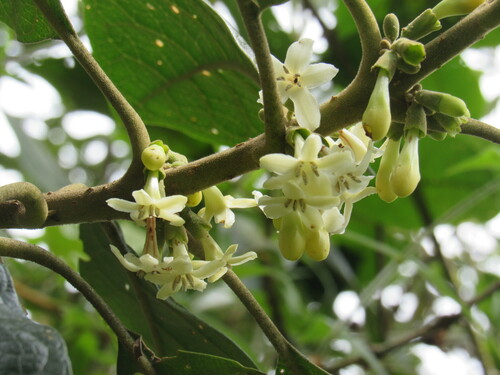
Aegiphila brachiata
Vell.

iNaturalist · cc-by-nc
(c) ehery, some rights reserved (CC BY-NC)
(c) ehery, some rights reserved (CC BY-NC)

iNaturalist · cc-by-nc
(c) ehery, some rights reserved (CC BY-NC)
(c) ehery, some rights reserved (CC BY-NC)
What to Eat
Edible parts: Fruit
The fruit is eaten.
Known Hazards
Where to Find It
It is a tropical plant. In Argentina it grows between 100-1,400 m above sea level.
Argentina, Brazil*, Paraguay, South America, Uruguay,
How to Identify
A shrub. The leaves are oval and taper to both ends and have teeth along the edge. The fruit is small and round and green.
Notes
Also put in the family Verbenaceae.
Names & Synonyms
Gaioleira
Aegiphila brasiliensis MoldenkeAegiphila hassleri Briq.Aegiphila polyantha Rojas AcostaAegiphila triantha Schauer
References (3)
- Brack, P., et al, 2020, Frutas nativas do Rio Grande do Sul, Brasil: riqueza e potencial alimentício. Native fruits of Rio Grande do Sul, Brazil: richness and potential as food. Rodriguésia 71: e03102018.
- Brittonia,1934, Moldenke, Genus Aegiphila. Vol. 1 ,5-6. p252 (As Aegiphila hassleri)
- Reis, S. V. and Lipp, F. L., 1982, New Plant Sources for Drugs and Foods from the New York Botanical Garden herbarium. Harvard. p 249 (As Aegiphila hassleri)