Vasconcellea pubescens
A. DC.
Mountain papaya
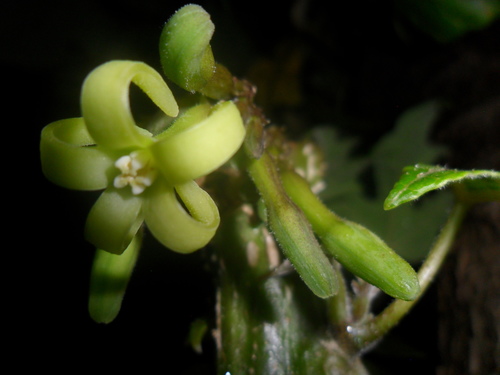
(c) Juan Sebastian Zabala Moreno, some rights reserved (CC BY-NC), uploaded by Juan Sebastian Zabala Moreno

(c) Omar Javier López Gómez, some rights reserved (CC BY-NC), uploaded by Omar Javier López Gómez
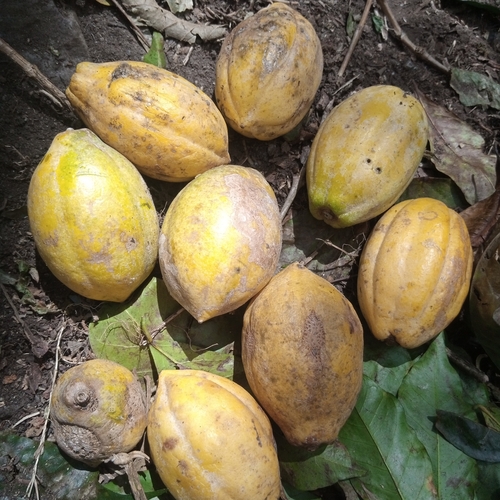
(c) Franco Mendoza, some rights reserved (CC BY-NC), uploaded by Franco Mendoza
What to Eat
Edible parts: Fruit
The mountain papaya fruit is normally eaten cooked, although some people do eat it raw. Since it has a naturally sourish pulp, it is usually sweetened with sugar or used in preserves, jams, juices, and ice creams. It can also be added to soups and stews to add rich, fruity flavors. The aroma of the fruit is considered to be one of the most important attributes since it is very strong and fruity, due to the complex volatile compounds in the flesh. The papain enzyme present in the milky latex of immature fruits and leaves is often used in the culinary industry as a meat tenderizer since it is a digestive enzyme. Traditionally, the mountain papaya fruit is also prepared as an infused drink including passion fruit, apple, and other fruits and is often sold by street vendors.
Where to Find It
They will grow to a higher altitude than common pawpaws. They grow at least between 1750 and 2200 m altitude. They can stand light frosts. They like a warm, dry site. They need shelter from the wind. It can grow in cooler tropical and subtropical climates. It suits a temperate between 10°C and 24°C. It benefits by plenty of rain. In the Andes it will grow above 2600 m altitude. It suits hardiness zones 10-11.
Africa, Andes, Argentina, Asia, Australia, Bolivia, Brazil, Central Africa, Central America, Chile, Colombia, Congo, Costa Rica, East Africa, Ecuador, India, Indonesia, Mexico, New Zealand, Pacific, Panama, Papua New Guinea, PNG, Peru, Philippines, Rwanda, SE Asia, South America, Sri Lanka, Venezuela,
How to Identify
A small tree. The tree has a silvery grey trunk. The tree is soft and not woody. It grows 1-2 m tall. The trunk has leaf scars. The leaves are smaller than ordinary pawpaw and deeply lobed. They are 8 sides and lobed. Leaves are 20-26 cm long by 34-40 cm wide. The leaf stalks are 17-34 cm long. Male and female flowers can be on the same or different plants. Many plants have both sexes. The fruit are small and angular. The fruit are 8-10 cm long. The fruit contain small round black skinned seed. The fruit is edible but tart.
How to Grow
They are grown from seed. Plants can be male, female or both sexes. Seeds germinate easily. They can grow in 30 days. Occasionally cuttings are used.
Propagation: Seed - sow in containers shaded from direct light. It germinates best at a temperature around 24 - 30c. Germinates in 2 - 6 weeks. Transfer the containers to a sunny position when plants are about 2 weeks old, planting out into permanent positions when the plants are large enough.
Medicinal Uses
High concentrations of the milky latex containing papain (a digestive enzyme) has been reported to help some people with indigestion (dyspeptics); it contains a cysteine endopeptidase mixture especially present in immature fruits that is used commercially by the pharmaceutical and food industries. The latex proteinases from the milky sap have been effectively tested on rodents to treat gastric ulcers. They have also been reported to treat diabetic foot treatments and gastric ulcers in several wounded models as well as reducing melanoma and metastasis levels in animal tumors. Traditionally in the central highlands of Colombia an infusion is made to combat cold and flu diseases. Research has found promise in the use of proteolytic fractions from the unripe fruit in the treatment of wounds and ulcers.
Production
Trees are fast growing. Trees from seed can start flowering after one year. Trees produce in 2-3 years. A tree can produce 50-60 fruit in a season. A spacing of 3 m is probably suitable. One plan can produce 50-60 fruit over a growth period of 4 months.
Other Information
Only a few plants occur in Papua New Guinea and fruit is rarely used.
Notes
There are at least 22-40 species of Carica.
Names & Synonyms
Bonete, Chamburo, Chamburu, Chanpuru, Chiblacan, Chiglacon, Chilhuacan, Hembra, Huanarpu, Jigacho, Kondapapaya, Papaya de monte, Papaya ve altura, Rolo jimba, Siglalon, Siglolon, Titi-ish, Toronche redondo, Toronchi
References (43)
- Ambasta S.P. (Ed.), 2000, The Useful Plants of India. CSIR India. p 105 (As Carica candamarcensis)
- Badillo, V.M. 1993. Caricaceae. Segundo esquema. Revista de la Facultad de Agronomía de la Universidad Central de la Universidad Central de Venezuela. Alcance 43.
- Bircher, A. G. & Bircher, W. H., 2000, Encyclopedia of Fruit Trees and Edible Flowering Plants in Egypt and the Subtropics. AUC Press. p 83 (As Carica pubescens)
- Bircher, A. G. & Bircher, W. H., 2000, Encyclopedia of Fruit Trees and Edible Flowering Plants in Egypt and the Subtropics. AUC Press. p 83 (As Carica candimarcensis)
- Bodkin, F., 1991, Encyclopedia Botanica. Cornstalk publishing, p 215
- Bourke, R. M., Altitudinal limits of 230 economic crop species in Papua New Guinea. Terra australis 32.
- Burkill, I.H., 1966, A Dictionary of the Economic Products of the Malay Peninsula. Ministry of Agriculture and Cooperatives, Kuala Lumpur, Malaysia. Vol 1 (A-H) p 464 (As Carica candamarcensis)
- Campbell, R.J. 1996. South American fruits deserving further attention. Pp. 431-439 In Progress in new crops. (J. Janick,eds.). ASHS Press, Arlington, VA.
- Castillo, R. O., 1995, Plant Genetic Resources in the Andes: Impact, Conservation, and Management. Crop Science 35:355-360 (As Carica)
- Coronel, R.E., 1982, Fruit Collections in the Philippines. IBPGR Newsletter p 9
- Darley, J.J., 1993, Know and Enjoy Tropical Fruit. P & S Publishers. p 90
- Etherington, K., & Imwold, D., (Eds), 2001, Botanica's Trees & Shrubs. The illustrated A-Z of over 8500 trees and shrubs. Random House, Australia. p 181
- Facciola, S., 1998, Cornucopia 2: a Source Book of Edible Plants. Kampong Publications, p 73 (As Carica pubescens)
- Flowerdew, B., 2000, Complete Fruit Book. Kyle Cathie Ltd., London. p 153 (As Carica candamarcensis)
- French, B.R., 1986, Food Plants of Papua New Guinea, A Compendium. Asia Pacific Science Foundation p 204 (As Carica candamarcensis)
- Gouldstone, S., 1978, Australian and New Zealand Guide to food bearing plants. Books for Pleasure. p 38 (As Carica candamarcensis)
- Gouldstone, S., 1983, Growing your own Food-bearing Plants in Australia. Macmillan p 115 (As Carica candamarcensis)
- Grandtner, M. M., 2008, World Dictionary of Trees. Wood and Forest Science Department. Laval University, Quebec, Qc Canada. (Internet database http://www.wdt.qc.ca)
- Grandtner, M. M. & Chevrette, J., 2013, Dictionary of Trees, Volume 2: South America: Nomenclature, Taxonomy and Ecology. Academic Press p 686
- Hermandez Bermejo, J.E., and Leon, J. (Eds.), 1994, Neglected Crops. 1492 from a different perspective. FAO Plant Production and Protection Series No 26. FAO, Rome. p15, 188
- Jardin, C., 1970, List of Foods Used In Africa, FAO Nutrition Information Document Series No 2.p 124 (As Carica candamarcensis)
- John, L., & Stevenson, V., 1979, The Complete Book of Fruit. Angus & Robertson p 289 (As Carica candamarcensis)
- Kermath, B. M., et al, 2014, Food Plants in the Americas: A survey of the domesticated, cultivated and wild plants used for Human food in North, Central and South America and the Caribbean. On line draft. p 901 (As Vansoncellea cundinamarcensis)
- Kew Plants of the World Online
- Kiple, K.F. & Ornelas, K.C., (eds), 2000, The Cambridge World History of Food. CUP p 1749, 1817
- Lyle, S., 2006, Discovering fruit and nuts. Land Links. p 103
- Macmillan, H.F. (Revised Barlow, H.S., et al) 1991, Tropical Planting and Gardening. Sixth edition. Malayan Nature Society. Kuala Lumpur. p
- Martin, F.W., C.W. Campbell and R.M. Ruberté. 1987.Perennial edible fruits of the tropics - An inventory. United States Department of Agriculture, Agricultural Research Service, Agriculture Handbook No. 642. Washington, D.C., USA. p 23
- Morton, J. F., 1987, Fruits of Warm Climates. Wipf & Stock Publishers p 346 (As Carica candamarcensis)
- PROSEA (Plant Resources of South East Asia) handbook, Volume 2, 1991, Edible fruits and nuts. (As Carica pubescens)
- Roa, J. A. G. & Boada, D. S. G., 2018, Fundación para el Fortalecimiento de la Fruticultura y Plantas Alimenticias no Convencionales en Colombia.
- Scheldeman,X. 2002.Cultivation Potential of native fruit species in Loja province Ecuador:Case study on Cherimoya (Annona cherimola) and complex of Highland papayas (Vasconcellea spp.).Faculteit Landbouwkundige en Toegepaste Biologishe Wetenscappen.GENT.
- Segura, S., et al, 2018, The edible fruit species in Mexico. Genet Resour Crop Evol (2018) 65:1767–1793
- Storey, W. B., 1979, Pineapple, in Simmonds N.W.,(ed), Crop Plant Evolution. Longmans. London. p 21
- Self, M., 199, Phoenix Seeds catalogue. p 16
- Torre, de la, L., et al, 2008, Enciclopedia de las Plantas Útiles del Ecuador. Herbario QCA. Pontificia Universidad Católica del Ecuador. p 276
- USDA, ARS, National Genetic Resources Program. Germplasm Resources Information Network - (GRIN). [Online Database] National Germplasm Resources Laboratory, Beltsville, Maryland. Available: www.ars-grin.gov/cgi-bin/npgs/html/econ.pl (10 April 2000)
- Van den Eynden, V., et al, 2003, Wild Foods from South Ecuador. Economic Botany 57(4): 576-603
- Van den Eynden, V., E. Cueva and O. Cabrera. 1999. Plantas silvestres comestibles del sur del Ecuador – Wild edible plants of southern Ecuador. Ediciones Abya-Yala, Quito, Ecuador.
- van Wyk, B., 2005, Food Plants of the World. An illustrated guide. Timber press. p 118
- Vickery, M.L. and Vickery, B., 1979, Plant Products of Tropical Africa, Macmillan. p 38 (As Carica candamarcensis)
- Wiersema, J. H. & Leon, B., 2013, World Economic Plants. A Standard Reference CRC Press. 2nd Ed. p 712
- World Checklist of Useful Plant Species 2020. Royal Botanic Gardens, Kew


