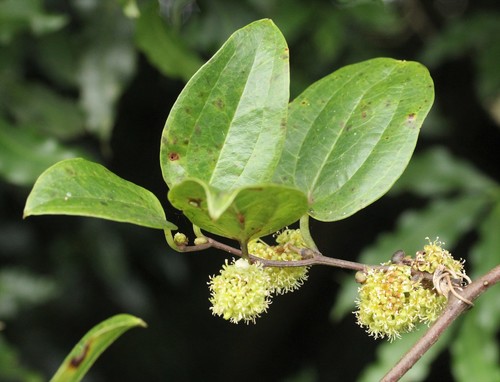
Smilax corbularia
Kunth

(c) Young Chan, some rights reserved (CC BY-NC), uploaded by Young Chan
(c) Dailun Shi, some rights reserved (CC BY-NC), uploaded by Dailun Shi
(c) Dailun Shi, some rights reserved (CC BY-NC), uploaded by Dailun Shi
What to Eat
Edible parts: Root
The roots are edible.
Where to Find It
It is a tropical plant. It south China it grows from sea level to 1,600 m above sea level.
Asia, China, Indochina, Indonesia, Laos, Malaysia, Myanmar, SE Asia, Thailand, Vietnam,
How to Identify
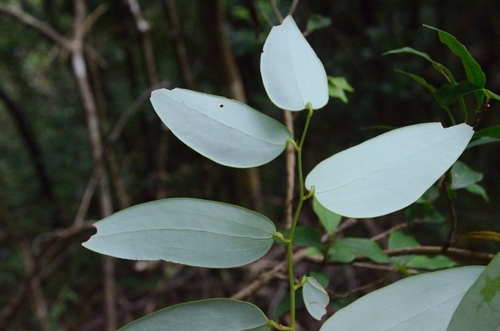
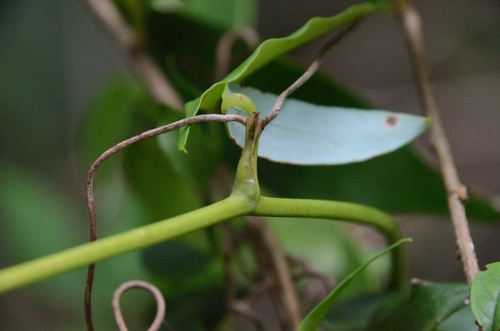
A climbing vine. The stems are branched and 3-9 m long. The leaf stalk has a narrow wing for part of its length. The leaves are oblong to narrowly oval and 4-14 cm long by 2-5 cm wide. The flowering arrangement is a single flat topped group. Male and female flowers are separate. The fruit are dark red, round berries 6-7 mm across.
How to Grow
It can be grown from seeds or rhizomes.
Medicinal Uses
It is used as a medicinal plant in Thailand, with roots containing oestrogens.
Notes
It is used as a medicinal plant in Thailand. The roots have oestrogens.
Names & Synonyms
Hua-khao-yen-nua, Kaoyennaey
References (3)
- Anderson, E. F., 1993, Plants and people of the Golden Triangle. Dioscorides Press. p 221
- Hill, M. & Hallam, D., (eds), 1997, Na Hang Nature Reserve, Tat Ke Sector. Site description and conservation evaluation. Hanoi. p 76
- Jiwajinda, S., et al, 2002, Suppressive Effects of Edible Thai Plants on Superoxide and Nitric Oxide Generation. Asian Pacific Journal of Cancer Prevention, Vol 3, 2002