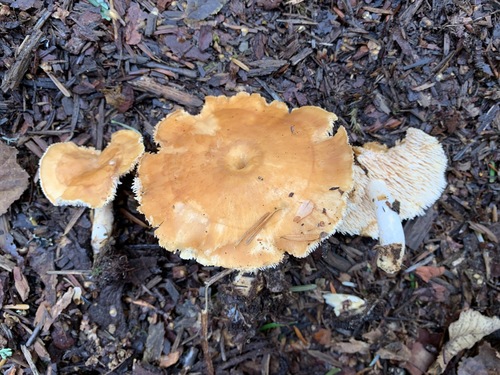
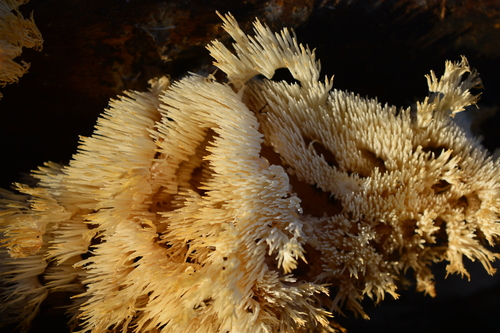
Hericium ramosum
(Bull.) Letell.
Comb tooth mushroom
HydnaceaeMushrooms
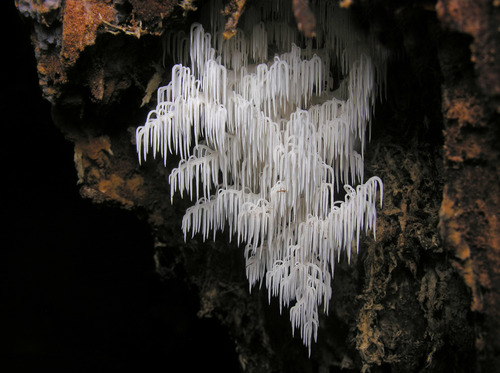
iNaturalist · cc-by-nc-sa
(c) Paul George, some rights reserved (CC BY-NC-SA)
(c) Paul George, some rights reserved (CC BY-NC-SA)
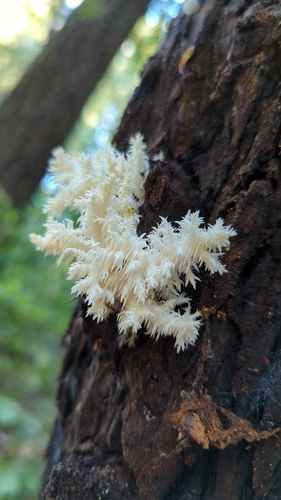
iNaturalist · cc-by
(c) Alan Rockefeller, some rights reserved (CC BY)
(c) Alan Rockefeller, some rights reserved (CC BY)
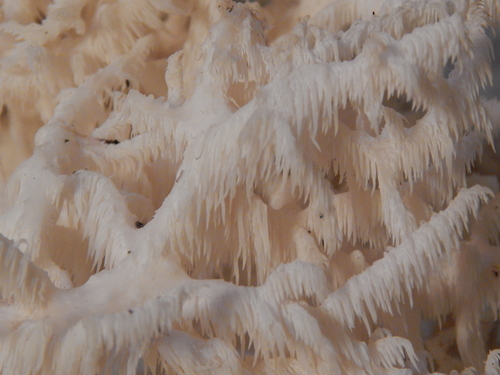
iNaturalist · cc-by-nc
(c) redroadrachel, some rights reserved (CC BY-NC)
(c) redroadrachel, some rights reserved (CC BY-NC)
What to Eat
Edible parts: Mushroom, Fungus
The fruiting body (mushroom) is edible.
Where to Find It
It is a temperate plant. California.
Asia, China, North America, USA,
Countries: United Arab Emirates, Afghanistan, Antigua & Barbuda, Armenia, Azerbaijan, Barbados, Bangladesh, Bahrain, Brunei, Bahamas, Bhutan, Belize, Canada, China, Costa Rica, Cuba, Dominica, Dominican Republic, Grenada, Georgia, Guatemala, Honduras, Haiti, Indonesia, Israel, India, Iraq, Iran, Jamaica, Jordan, Japan, Kyrgyzstan, Cambodia, St Kitts & Nevis, North Korea, South Korea, Kuwait, Kazakhstan, Laos, Lebanon, St Lucia, Sri Lanka, Myanmar, Mongolia, Maldives, Mexico, Malaysia, Nicaragua, Nepal, Oman, Panama, Philippines, Pakistan, Puerto Rico, Qatar, Saudi Arabia, Singapore, El Salvador, Syria, Thailand, Tajikistan, Timor-Leste, Turkmenistan, Turkey, Trinidad & Tobago, Taiwan, United States, Uzbekistan, St Vincent, Vietnam, Yemen
How to Identify
Hericium ramosum is a mushroom in the family Hydnaceae found in temperate regions of California.
Medicinal Uses
Hericium species are commonly found and consumed in North America and China. The species is readily cultivated. Hericium is used in the folk medicine of China and Japan, but there is no high-quality clinical research as of 2020 to indicate that it has any medicinal or biological properties. The genus Hericium produces the phytochemicals, erinacines and hericenones, which are cyathane metabolites under basic research.
Names & Synonyms
Jiahoutou
References (3)
- Boa, E. R., 2004, Wild edible fungi and their importance to people. FAO Non Wood Forest Products Booklet 17
- Hall, I. R., et al, 2003, Edible and Poisonous Mushrooms of the World. Timber Press. p 309
- http://www.mykoweb.com/CAF/edible.html