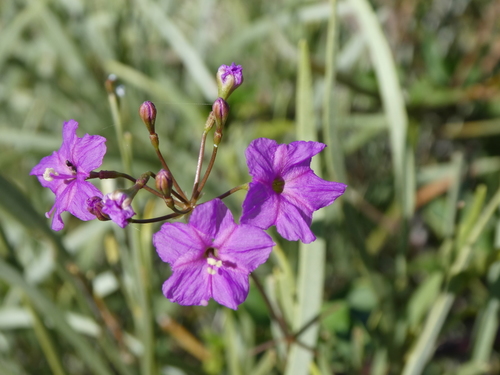
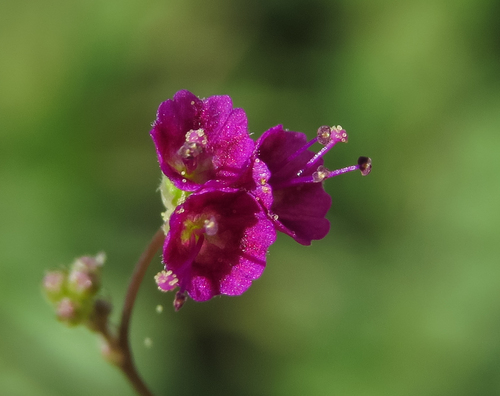
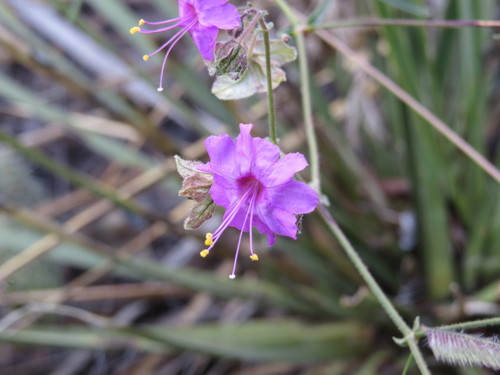
Mirabilis oxybaphoides
(A. Gray) A. Gray
Smooth spreading Four o'clock
iNaturalist · cc-by-nc
(c) Kenneth Bader, some rights reserved (CC BY-NC), uploaded by Kenneth Bader
(c) Kenneth Bader, some rights reserved (CC BY-NC), uploaded by Kenneth Bader

iNaturalist · cc-by-nc
(c) frankiecoburn, some rights reserved (CC BY-NC), uploaded by frankiecoburn
(c) frankiecoburn, some rights reserved (CC BY-NC), uploaded by frankiecoburn

iNaturalist · cc-by-nc
(c) Carlos E. Vargas, some rights reserved (CC BY-NC)
(c) Carlos E. Vargas, some rights reserved (CC BY-NC)
What to Eat
Edible parts: Leaves, Leaves - tea
The leaves are eaten as greens and are also used as a tea.
Where to Find It
It is a temperate plant.
North America, USA,
Countries: Antigua & Barbuda, Barbados, Bahamas, Belize, Canada, Costa Rica, Cuba, Dominica, Dominican Republic, Grenada, Guatemala, Honduras, Haiti, Jamaica, St Kitts & Nevis, St Lucia, Mexico, Nicaragua, Panama, Puerto Rico, El Salvador, Trinidad & Tobago, United States, St Vincent
How to Identify
A herb. It often lies along the ground and is tangled with other plants. It grows 20-120 cm long. It has lines of hairs. The leaves are spreading and oval. They are 2-8 cm long by 1-8 cm wide. The fruit are olive or black. They are oval and 3 mm across.
Names & Synonyms
Oxybaphus wrightii (A. Gray) Hemsl.Quamoclidion oxybaphoides A. Grayand others
References (1)
- Moerman, D. F., 2010, Native American Ethnobotany. Timber Press. p 345