Piloblephis rigida
(Bartram ex Benth.) Raf.
Wild pennyroyal
iNaturalist · cc-by-nc
(c) Eric M Powell, some rights reserved (CC BY-NC), uploaded by Eric M Powell
(c) Eric M Powell, some rights reserved (CC BY-NC), uploaded by Eric M Powell

iNaturalist · cc-by
(c) Alex Abair, some rights reserved (CC BY), uploaded by Alex Abair
(c) Alex Abair, some rights reserved (CC BY), uploaded by Alex Abair

iNaturalist · cc-by
(c) Alex Abair, some rights reserved (CC BY), uploaded by Alex Abair
(c) Alex Abair, some rights reserved (CC BY), uploaded by Alex Abair
What to Eat
Edible parts: Leaves - flavouring, Leaves - tea
The leaves are used as a flavouring for soups and brewed into herbal teas.
Where to Find It
It is a subtropical plant.
North America, USA,
Countries: Antigua & Barbuda, Barbados, Bahamas, Belize, Canada, Costa Rica, Cuba, Dominica, Dominican Republic, Grenada, Guatemala, Honduras, Haiti, Jamaica, St Kitts & Nevis, St Lucia, Mexico, Nicaragua, Panama, Puerto Rico, El Salvador, Trinidad & Tobago, United States, St Vincent
How to Identify
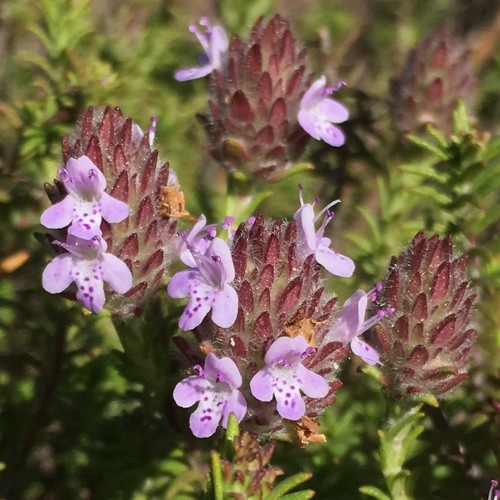
A shrub. It is low growing and slightly woody. It grows 25-50 cm tall. The branches are stiff. The flowers are lavender with white throats and purple spots. The flowers have hairs on them.
How to Grow
It can be grown by seeds or cuttings.
Medicinal Uses
Traditionally used in herbal tea preparations.
Names & Synonyms
Clinopodium rigidum (Bartram ex Benth.) KuntzePiloblephis ericoides Raf.Pycnothymus rigidus (Gartram ex Benth.) SmallSatureja rigida Bartram ex Benth.
References (3)
- Kermath, B. M., et al, 2014, Food Plants in the Americas: A survey of the domesticated, cultivated and wild plants used for Human food in North, Central and South America and the Caribbean. On line draft. p 656
- Moerman, D. F., 2010, Native American Ethnobotany. Timber Press. p 403
- Reis, S. V. and Lipp, F. L., 1982, New Plant Sources for Drugs and Foods from the New York Botanical Garden herbarium. Harvard. p 261 (As Pycnothymus rigidus)