Ranunculus recurvatus
Poir.
Blisterwort

(c) Greg Funka, some rights reserved (CC BY-NC), uploaded by Greg Funka
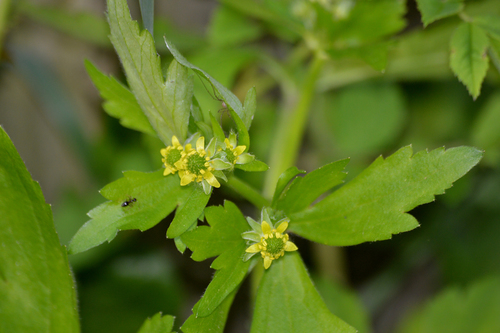
(c) Mark Kluge, some rights reserved (CC BY-NC), uploaded by Mark Kluge
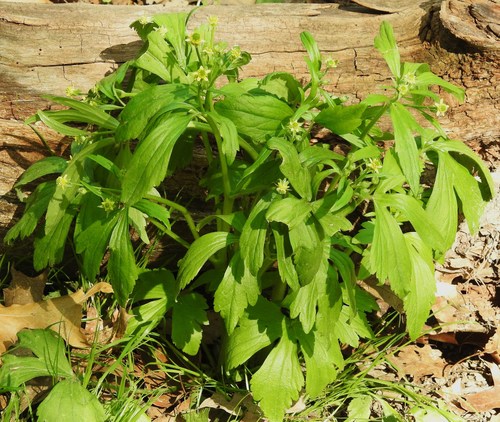
(c) Bonnie Kinder, some rights reserved (CC BY-NC), uploaded by Bonnie Kinder
What to Eat
Edible parts: Leaves
The leaves are cooked and eaten as greens.
Where to Find It
It is a tropical plant.
Dominican Republic, North America, USA, West Indies,
How to Identify
A herb in the buttercup family (Ranunculaceae) found in tropical regions.
Wikipedia
Source ↗Ranunculus recurvatus, the blisterwort or hooked crowfoot, is a plant species of the genus Ranunculus in the family Ranunculaceae native to eastern North America. It is an early-flowering plant of moist deciduous woods from central Quebec south to Florida. This herbaceous perennial plant is about 1-2' tall, consisting of some basal leaves, branched stems with alternate leaves, and flowers. The basal leaves are up to 5" long and 5" across; they have long hairy petioles. Each basal leaf is palmately cleft into 3-5 lobes; these lobes are often divided again into smaller lobes. The alternate leaves are similar to the basal leaves, except they become smaller as they ascend the stems and their petioles are shorter. The upper leaves are more slender and divided into fewer lobes. The margins of the leaves are crenate or dentate. The upper surface of each leaf is medium to dark green and glabrous. The stems are light green, terete, and covered with long hairs; they are erect to ascending, rather than sprawling across the ground.
References (1)
- Moerman, D. F., 2010, Native American Ethnobotany. Timber Press. p 468


