Ranunculus reptans
L.
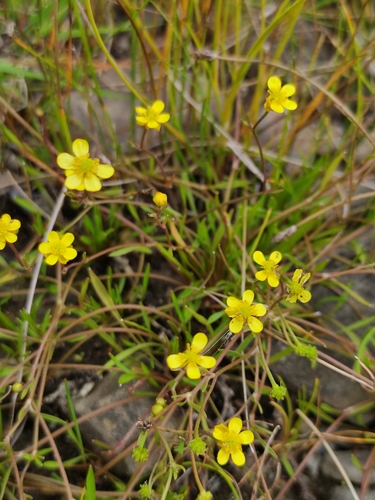
(c) Nadezhda Shimalina, some rights reserved (CC BY-NC), uploaded by Nadezhda Shimalina
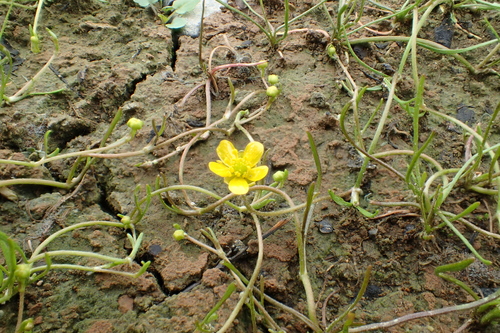
(c) Владимир Бурый, some rights reserved (CC BY-NC), uploaded by Владимир Бурый

(c) Babette Köhler, some rights reserved (CC BY-NC), uploaded by Babette Köhler
What to Eat
Edible parts: Roots
The roots are edible when cooked. They were traditionally baked and then dipped in oil before eating.
Known Hazards
Where to Find It
It is a temperate plant.
Asia, Mongolia, North America, USA,
How to Identify
A fast-growing perennial reaching 0.2 m (8 in) tall and spreading to 1 m (3 ft 3 in). Frost-hardy with hermaphrodite flowers appearing June to August, pollinated by bees, flies, and beetles. Adapts to light sandy, medium loamy, and heavy clay soils across mildly acidic to basic pH. Tolerates semi-shade or full sun and prefers moist to wet soil.
How to Grow
Prefers a moist loamy soil on the heavy side. A greedy plant, inhibiting the growth of nearby plants, especially legumes.
Propagation: Sow seed in spring in a cold frame. Prick seedlings out into individual pots once large enough to handle, and plant out during summer. Division in spring is also straightforward; larger divisions can be planted directly into their permanent positions.
Medicinal Uses
None known.
Other Uses
None known.
Wikipedia
Source ↗Ranunculus reptans is a species of flowering plant belonging to the family Ranunculaceae. Its native range is Subarctic and Temperate Northern Hemisphere.
References (2)
- Moerman, D. F., 2010, Native American Ethnobotany. Timber Press. p 469
- Urgamal, M., Oyuntsetseg, B., Nyambayar, D. & Dulamsuren, Ch. 2014. Conspectus of the vascular plants of Mongolia. (Editors: Sanchir, Ch. & Jamsran, Ts.). Ulaanbaatar, Mongolia. “Admon“ Press. 334pp. (p. 79-90).


