Cryptocoryne ciliata
(Roxb.) Fisch. ex Wydler
Crypt ciliata
AraceaeLeaves
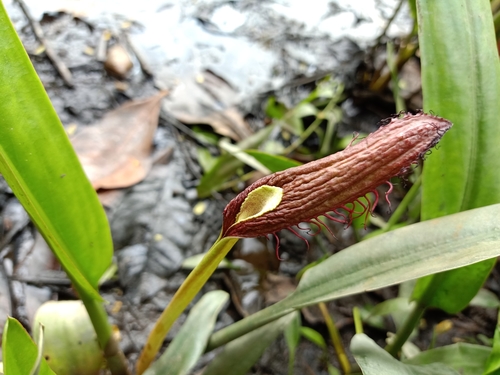
iNaturalist · cc-by-nc
(c) Alexius L.Z.L, some rights reserved (CC BY-NC), uploaded by Alexius L.Z.L
(c) Alexius L.Z.L, some rights reserved (CC BY-NC), uploaded by Alexius L.Z.L
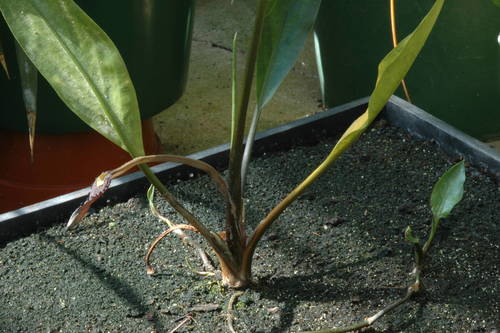
iNaturalist · cc-by-nc-sa
(c) Smithsonian Institution, National Museum of Natural History, Department of Botany, some rights reserved (CC BY-NC-SA)
(c) Smithsonian Institution, National Museum of Natural History, Department of Botany, some rights reserved (CC BY-NC-SA)
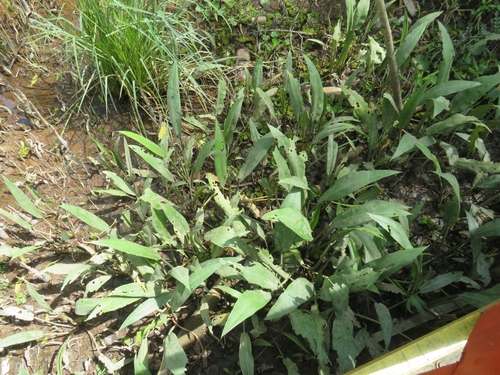
iNaturalist · cc-by-nc
(c) Alfonsus Toribio Eko Saputro, some rights reserved (CC BY-NC), uploaded by Alfonsus Toribio Eko Saputro
(c) Alfonsus Toribio Eko Saputro, some rights reserved (CC BY-NC), uploaded by Alfonsus Toribio Eko Saputro
What to Eat
Edible parts: Leaves
The leaves are eaten.
Where to Find It
It is a tropical plant. It grows in water 50 cm deep. It is best with a nutrient rich muddy substrate.
Asia, India, Indochina, Myanmar, SE Asia, Thailand,
Countries: United Arab Emirates, Afghanistan, Armenia, Azerbaijan, Bangladesh, Bahrain, Brunei, Bhutan, China, Georgia, Indonesia, Israel, India, Iraq, Iran, Jordan, Japan, Kyrgyzstan, Cambodia, North Korea, South Korea, Kuwait, Kazakhstan, Laos, Lebanon, Sri Lanka, Myanmar, Mongolia, Maldives, Malaysia, Nepal, Oman, Philippines, Pakistan, Qatar, Saudi Arabia, Singapore, Syria, Thailand, Tajikistan, Timor-Leste, Turkmenistan, Turkey, Taiwan, Uzbekistan, Vietnam, Yemen
How to Identify
A herb. It grows 40-50 cm. It grows in water. The leaves are broadly sword shaped and 15-25 cm long by 3-5 cm wide. They are pale green. The edges can be wavy.
How to Grow
It can be grown by runners.
Production
It grows slowly.
Names & Synonyms
Leik-sa, Nga-dan-sa, Phak khanchong
Ambrosina ciliaris Spreng.Ambrosina ciliata Roxb.Arum ciliatum (Roxb.) LoudonCryptocoryne alata Griff.Cryptocoryne ciliata var. latifolia RatajCryptocoryne drymorrhisa Zipp. ex SchottCryptocorye elata Griff.
References (1)
- Price, L. L., 1997, Wild Plant Food in Agricultural Environments: A Study of Occurrence, management and gathering Rights in Northeast Thailand. Human Organization. 56(2)


